Export figures, greenhouse production and leading varieties from Turkey, the world's 3rd-largest tomato producer.
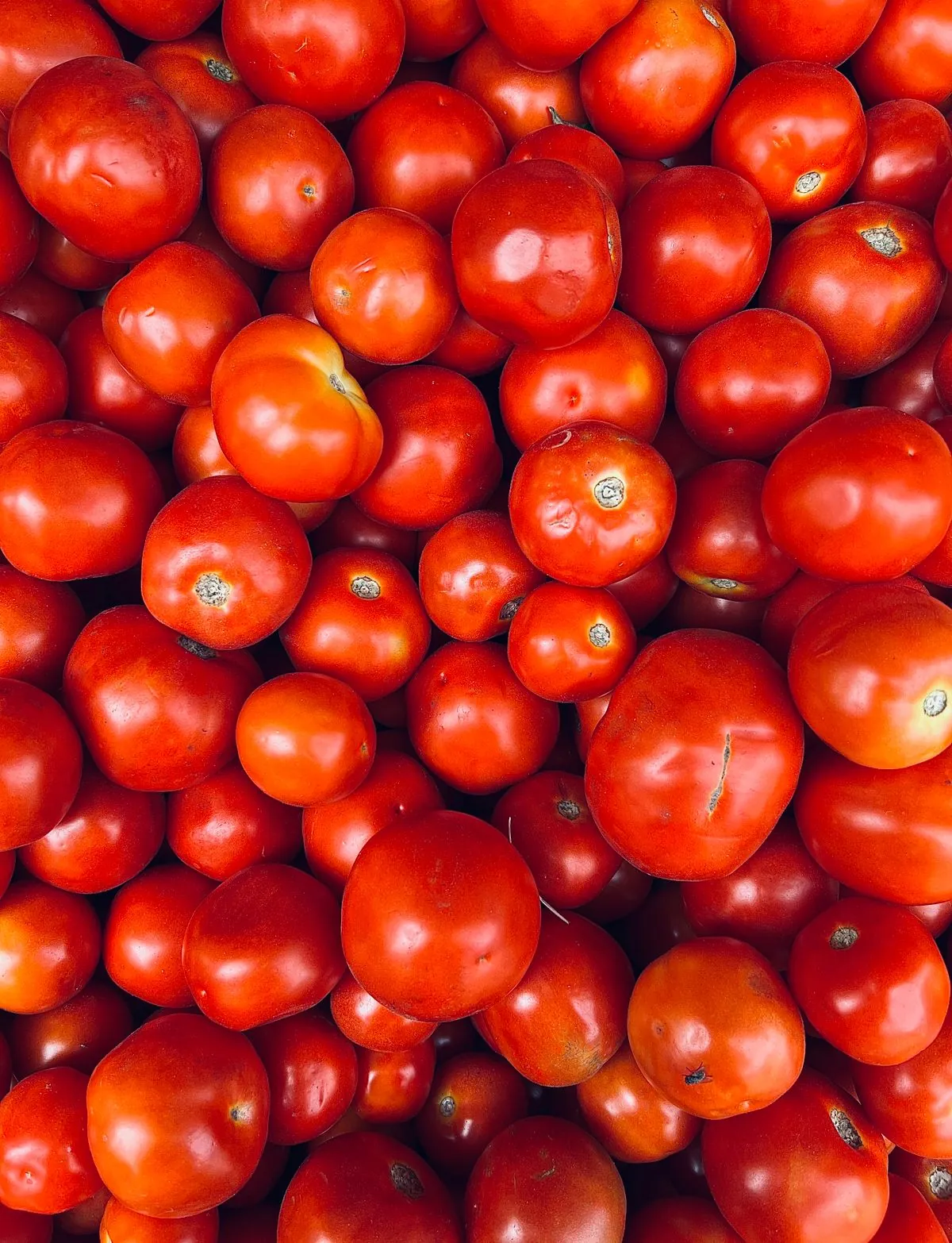
Turkey is the world's 3rd-largest tomato producer, according to FAO and TÜİK (Turkish Statistical Institute) data, behind China and India. TÜİK's 2024 estimates put national production at roughly 14.6 million tons across 182,000 hectares — making tomato the single largest vegetable category in Turkey's output.
According to sector sources, fresh tomato exports reached $401.2 million in 2025, on 402,234 tons shipped to 51 countries — a modest pullback from 2024's $426.7 million, which the sector attributes to weather-related production losses. In the first half of 2026, exports totaled $252.5 million on 161,679 tons to 46 countries; shipped volume was down year-on-year, but revenue held up relatively well as the average price per kilogram rose.
| Period | Export Value | Volume | Countries |
|---|---|---|---|
| 2024 (full year) | $426.7M | — | — |
| 2025 (full year) | $401.2M | 402,234 tons | 51 |
| 2026 (H1) | $252.5M | 161,679 tons | 46 |
Leading buyer countries
In full-year 2025, Romania ($83.9M), Ukraine ($63.5M), Russia ($55.1M), Bulgaria ($40.0M) and Germany ($23.5M) were the largest buyers of Turkish tomato. The first half of 2026 showed a similar pattern, led by Romania ($65.5M), Russia ($31.9M) and Ukraine ($28.3M) — neighboring and nearby markets continue to carry the bulk of tomato export volume.
Greenhouse production: the key to winter exports
What keeps Turkish tomato exports moving through winter is Mediterranean coastal greenhouse (covered) production. Antalya and Mersin anchor the country's greenhouse tomato output; growing there typically runs October through May, with the heaviest harvest window from December to April. Antalya alone exported 548,000 tons of fresh produce in 2025 — 437,000 tons of vegetables and 111,000 tons of fruit — with the Serik and Manavgat districts standing out for their modernized soilless (hydroponic) greenhouse operations.
Variety range: from truss to pink
MC Sarıkaya Gıda supplies truss (vine) tomato, cherry tomato, pink tomato and beef tomato. Among these, pink tomato is prized — particularly in the domestic market and around Antalya, its main production hub — for its thin skin and its high-sugar, low-acid balance, which gives it a distinctive taste. Truss tomato, sold still attached to the vine, is favored in European markets for the perceived freshness and shelf-life advantage that gives buyers.
What quality control actually looks at
Serious buyers judge a tomato shipment by ripeness stage, not a single grading code: five to six color stages are recognized from dark green to full red, and each stage travels at a different temperature — dark green at 12.5-15°C, light red at 10-12.5°C, and fully ripe fruit at 7-10°C but only for 3-5 days. Tomato can suffer chilling injury below 10°C if held over two weeks, or below 5°C in under a week — fruit fails to color properly, surface pitting appears, decay risk rises — which is why 12.5°C is treated as the practical "safe" threshold.
Visual inspection looks for defects including blossom-end rot (a dry, leathery dark patch from calcium stress), catfacing (puckered, scarred malformation near the stem end), greenback/uneven ripening, and growth cracks — any of these can trigger a grade downgrade or rejection. Thin-skinned, delicate varieties like pink tomato are typically packed in single-layer trays (around 6 kg net) rather than bulk cartons for this reason.
Visit our Seasonal Calendar for current harvest and supply status, our tomato product page for the full variety list, and our Export page for shipping terms and process details.
Frequently Asked Questions
Where does Turkey rank in global tomato production?
According to TÜİK and FAO data, Turkey is the world's 3rd-largest tomato producer, behind China and India; TÜİK's 2024 estimate puts national production at roughly 14.6 million tons.
Which countries buy the most Turkish tomato?
According to sector sources, Romania, Ukraine, Russia, Bulgaria and Germany were the largest buyers of Turkish tomato in 2025; Romania, Russia and Ukraine led again in the first half of 2026.
Can Turkish tomato be exported in winter?
Yes — greenhouse (covered) production in Antalya and Mersin runs roughly October through May, with the heaviest harvest from December to April, which keeps supply flowing through the winter months.
What do tomato buyers actually check on arrival?
Rather than a grading code alone, buyers check ripeness-stage transport temperature (dark green 12.5-15°C, light red 10-12.5°C, fully ripe 7-10°C) and visual defects like blossom-end rot, catfacing and growth cracks.