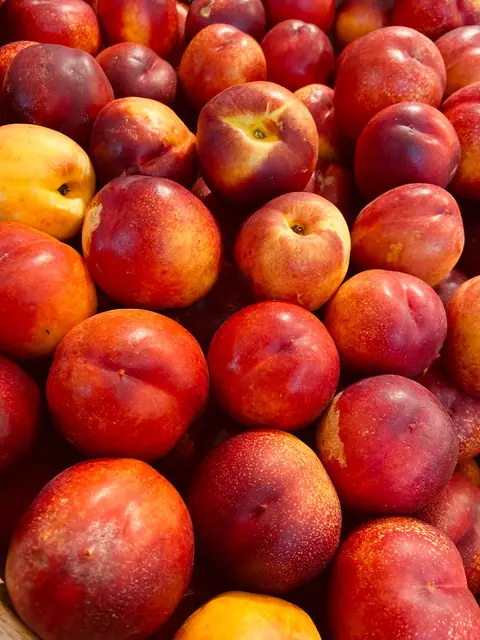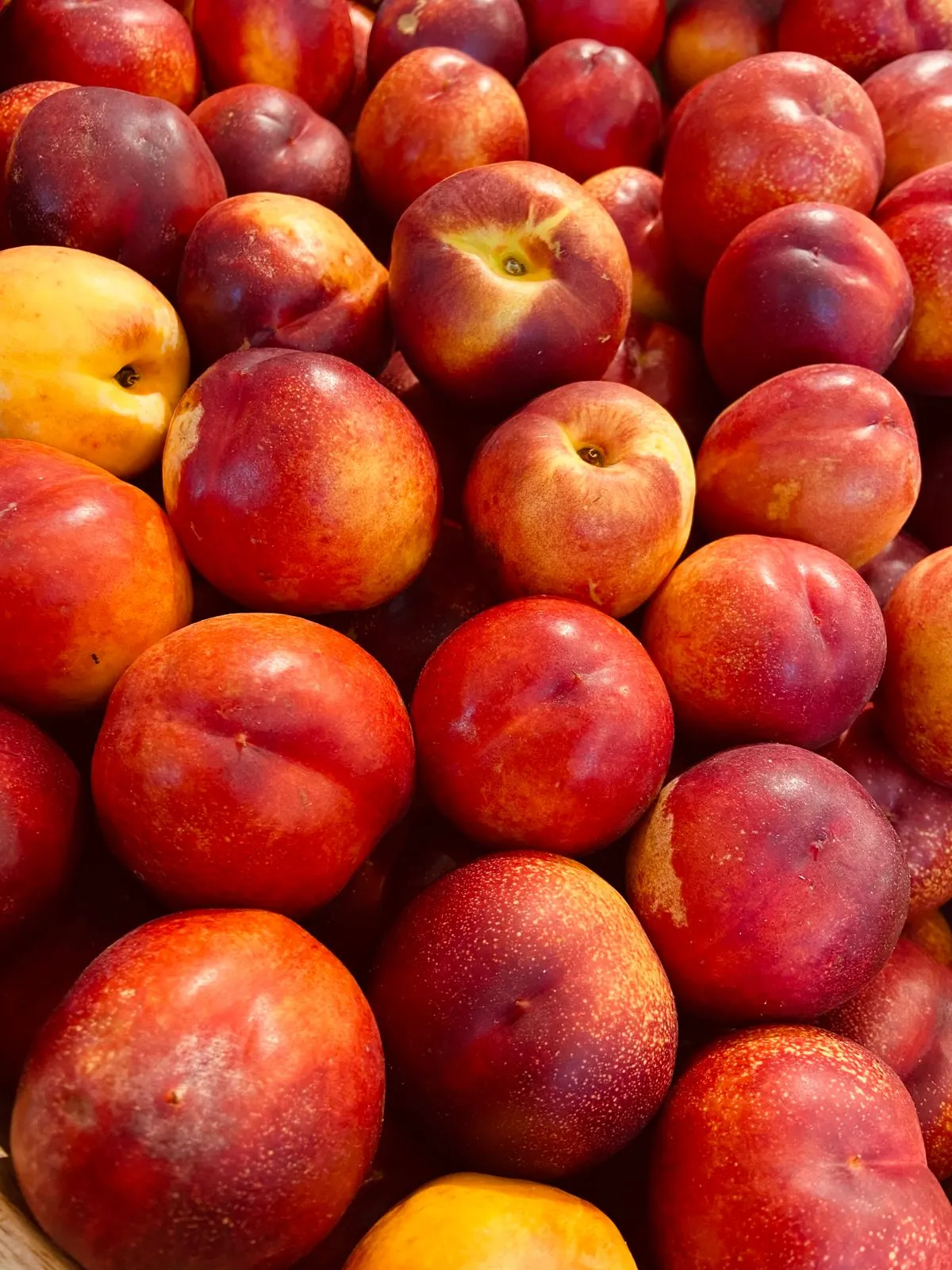
MC Sarıkaya Gıda sources the nectarine portfolio, with early and late season varieties from various production regions across Turkey, puts it through quality control, and supplies it to domestic and export markets. You can check the harvest calendar below for current supply availability.
Nectarine is sourced from various growing regions across Turkey, particularly Bursa, Mersin, Antalya, Manisa, Çanakkale; drawing on multiple regions helps keep supply steady and quality consistent throughout the season.
The nectarine, a fuzz-free variant of the peach, has been grown for centuries; Turkey's temperate-climate regions offer ideal conditions for this fruit.
Product Overview
Sizes & Calibers
| Caliber (mm / g) | Range |
|---|---|
| D | 51-56 mm, 65-85 g |
| C | 56-61 mm, 85-105 g |
| B | 61-67 mm, 105-135 g |
| A | 67-73 mm, 135-180 g |
| AA | 73-80 mm, 180-220 g |
| AAA | 80-90 mm, 220-300 g |
| AAAA | 90 mm+, 300 g+ |
Packaging Options
- 30×50×10 cm single-layer carton2-3 kg net, 144 boxes on a 100×120 cm pallet
- 17×26×10 cm small carton1-1.5 kg net, 378 boxes on a 100×120 cm pallet
Featured Varieties
An early-season variety with dark red skin and yellow flesh; its balanced sweet-tart flavor puts it among the first nectarines to reach the market each season.
An early variety with red skin and firm, juicy flesh; its balanced flavor suits it to both fresh eating and transport.
A late-season freestone variety, meaning the pit separates easily from the flesh; it has dark red skin and juicy, aromatic flesh, and is grown in the Bursa region.
Of Californian origin, Big Top is one of the world's most widely planted nectarine varieties; known for its deep red skin and firm yellow flesh. Its balanced sweet-tart aroma makes it sought after in international markets, and it is also widely grown in Turkey.
A large-fruited, late-season variety; its firm, juicy flesh suits long-distance shipping.
Known for its firm, juicy light-yellow flesh, this early-season Zaiger nectarine's sturdy structure makes it widely used in export shipments.
Growing & Harvest
Nectarines share the same growing requirements as peaches; a temperate climate, adequate winter chilling, and well-drained soil support good yields in orchards across Çanakkale, Bursa, Mersin, Antalya, and Manisa; Mersin holds the largest share of Turkey's nectarine output, with Çanakkale among the top three (TÜİK). Because its skin is fuzz-free, the fruit can be somewhat more prone to scuffing and sunburn than peaches, so careful handling during harvest and packing matters. Fruit ripens as its ground color shifts, and is generally hand-picked in several passes.
Uses & Applications
Nectarines are consumed mainly fresh; their sweet, aromatic character also lends itself to fruit salads, desserts, and, to a lesser extent, compotes. Compared to peaches, their thinner, glossy skin makes them easy to wash and eat skin-on. Cold-chain storage after harvest is important for preserving freshness.
Frequently Asked Questions
Does MC Sarıkaya Gıda export nectarine?
Yes, MC Sarıkaya Gıda supplies the nectarine portfolio, with early and late season varieties to both domestic and export markets. You can check our seasonal calendar page for the current harvest period, or contact us directly.
What packaging is used to ship Nectarine?
Shipments of Nectarine typically use 30×50×10 cm single-layer carton or 17×26×10 cm small carton, in line with standard industry practice; alternative packaging options can be arranged upon request.
What is the minimum order quantity for Nectarine?
For road shipments, orders start from one pallet per product within a mixed load; sea shipments are planned on a full 40' reefer container basis. Send us your product, target country and delivery date for an exact quantity and quote.
What is the shelf life and storage requirement for Nectarine?
Nectarine is delicate with a relatively short shelf life; rapid pre-cooling after harvest and an unbroken cold chain during transport are key to preserving freshness.
How is Nectarine sorted and quality-checked before shipment?
Before shipment, products are checked for size, color, and ripeness; anything below standard is sorted out, so only export-quality batches are shipped.