
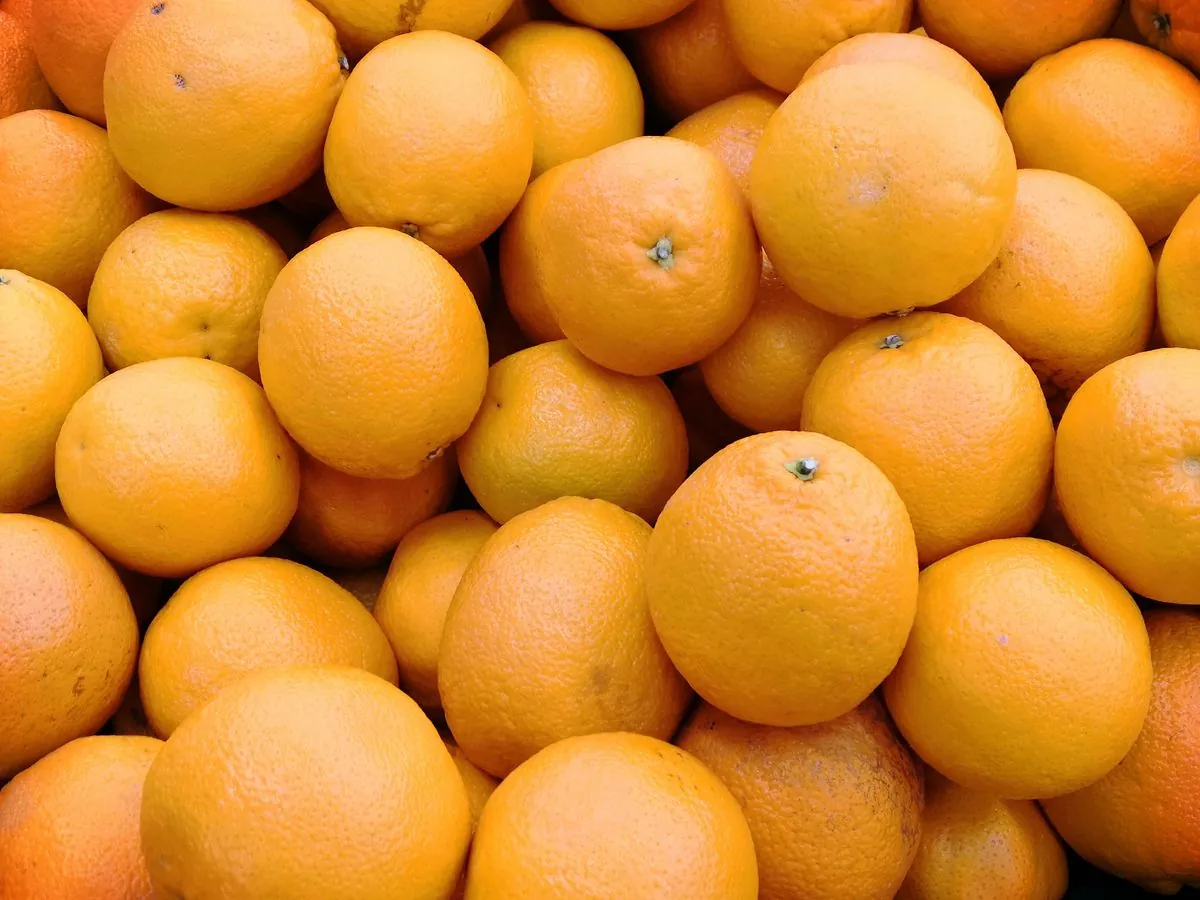
MC Sarıkaya Gıda sources navel and table orange varieties from various production regions across Turkey, puts it through quality control, and supplies it to domestic and export markets. You can check the harvest calendar below for current supply availability.
Orange is sourced from various growing regions across Turkey, particularly Mersin, Adana, Antalya, Hatay; drawing on multiple regions helps keep supply steady and quality consistent throughout the season.
The orange reached the Mediterranean via Old World trade routes; today the Mersin and Adana coastal strip is among Turkey's leading orange production regions.
Product Overview
Sizes & Calibers
| Size Code (mm) | Range |
|---|---|
| 0 | 92-110 mm |
| 1 | 87-100 mm |
| 2 | 84-96 mm |
| 3 | 81-92 mm |
| 4 | 77-88 mm |
| 5 | 73-84 mm |
| 6 | 70-80 mm |
| 7 | 67-76 mm |
| 8 | 64-73 mm |
| 9 | 62-70 mm |
| 10 | 60-68 mm |
| 11 | 58-66 mm |
| 12 | 56-63 mm |
| 13 | 53-60 mm |
Packaging Options
- 40×60×18 cm cartonWashington 12 kg (50 boxes on a 100×120 cm pallet) or Navelina/Finike 16 kg (50 boxes)
- 30×50×25 cm cartonValencia 15-16 kg net, 56 boxes on a 100×120 cm pallet
- 30×50×22 cm plastic case14 kg net, 64 cases on a 100×120 cm pallet
- 20×33×15.5 cm small carton3.65 kg net, 198 boxes on a 100×120 cm pallet
- Ventilated telescopic box (15-16 kg)Common alternative format in international markets
- 1-2 kg retail netShelf-ready packing on request
Featured Varieties
Recognized by its characteristic 'navel' formation, Washington Navel is one of the world's best-known table orange varieties, with seedless segments, thick peel, and a sweet flavor.
An early-ripening sport of Washington Navel, Navelina reaches the market as one of the season's first oranges, with thin peel and juicy flesh.
An early navel variety of Japanese origin; with its deep orange-reddish rind, medium size, and balanced flavor it enters the market at the start of the season, standing alongside Navelina in early exports.
Discovered in Venezuela as a Washington Navel mutation, Cara Cara owes its pink-red flesh to lycopene; its low acidity, sweet flavor, and striking interior make it a sought-after navel on premium shelves.
A Washington Navel selection whose thin skin, juiciness, and rich aroma are attributed to the alluvial soils of the Finike district of Antalya; the name has carried Turkish geographic-indication (PDO/Menşe Adı) protection since 2008, restricting it to fruit grown in this specific district, and it comes to harvest in midwinter.
One of the most intensely colored blood orange varieties; its flesh turns deep red with anthocyanin pigments, developing full color in orchards with marked day-night temperature differences. With a characteristic aroma reminiscent of raspberry and strawberry, it is a sought-after winter fruit for both the table and juicing.
Found in Spain as a Washington Navel mutation, Navelate can hold its fruit on the tree for months without losing quality — the bridge variety that carries navel supply into spring.
Harvested late in the season, Valencia is a versatile variety with few seeds, a high juice content, and a strong tolerance for staying on the tree, making it suitable for both fresh eating and juice production.
Ripening roughly four to six weeks after Washington Navel, Lane Late is a late-season navel variety that can hang on the tree for a long time without losing quality; its thick peel and low seed count carry it from late spring into early summer.
A classic table variety of Eastern Mediterranean origin, navel-less and nearly seedless; known for its thick but easy-to-peel rind and characteristic sweet flavor, it comes to harvest in midwinter.
Growing & Harvest
Orange trees are grown in open-field orchards on coastal plains where mild Mediterranean winters meet hot summers; sites with low frost risk and long sun exposure are preferred for new plantings. The trees begin bearing fruit within a few years of planting and are long-lived, with yields increasing over time. Harvest is done by hand; because peel color does not always match internal ripeness exactly, picking time is usually confirmed with brix (sugar) and acidity measurements.
Uses & Applications
Oranges are grown for both fresh table consumption and the juicing industry; seedless navel types like Washington Navel and Navelina go mostly to the fresh market, while late-season varieties like Valencia serve both table use and juice pressing. For fresh export, glossy, blemish-free peel and consistent sizing are key criteria; cold storage and careful handling after harvest help the fruit stay fresh over long-distance shipments.
Frequently Asked Questions
Does MC Sarıkaya Gıda export orange?
Yes, MC Sarıkaya Gıda supplies navel and table orange varieties to both domestic and export markets. You can check our seasonal calendar page for the current harvest period, or contact us directly.
What packaging is used to ship Orange?
Shipments of Orange typically use 40×60×18 cm carton or 30×50×25 cm carton, in line with standard industry practice; alternative packaging options can be arranged upon request.
What is the minimum order quantity for Orange?
For road shipments, orders start from one pallet per product within a mixed load; sea shipments are planned on a full 40' reefer container basis. Send us your product, target country and delivery date for an exact quantity and quote.
What is the shelf life and storage requirement for Orange?
Thanks to its peel, Orange keeps longer than many fresh products; cold-chain transport is still recommended to preserve export quality.
How is Orange sorted and quality-checked before shipment?
Before shipment, products are checked for size, color, and ripeness; anything below standard is sorted out, so only export-quality batches are shipped.
Related Products
Related Articles
Transport and Storage Temperatures for Turkish Fresh Produce: Set-Points by Product
How the reefer set-point is fixed before loading, the two temperature groups of Turkish fresh produce, and the per-product storage and transport table.
Export GuidePesticide Residues and MRL Compliance: Rules That Vary by Market
Caliber is destination-independent; pesticide-residue (MRL) compliance is not. The EU's control regime for citrus and produce, and who owns spray records.
Product Guide
Variety Differences in Citrus Export: Navelina, Valencia, Washington Navel
Navelina, Washington Navel, Valencia and Lane Late oranges, plus Star Ruby, Rio Red and White Marsh grapefruit: variety differences, uses and harvest periods.