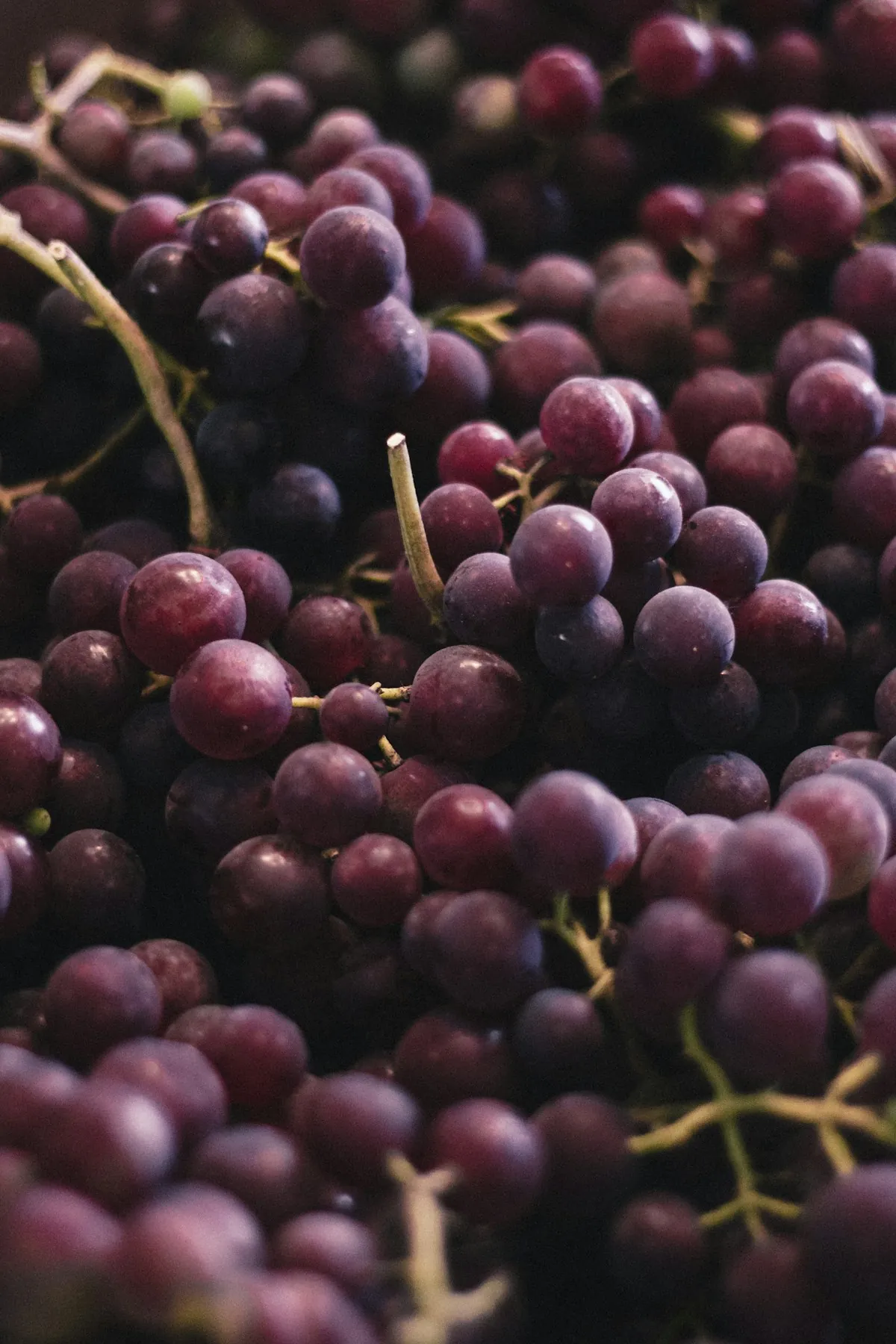
MC Sarıkaya Gıda sources table grape varieties from various production regions across Turkey, puts it through quality control, and supplies it to domestic and export markets. You can check the harvest calendar below for current supply availability.
Grapes is sourced from various growing regions across Turkey, particularly İzmir, Manisa, Denizli, Gaziantep, Tekirdağ; drawing on multiple regions helps keep supply steady and quality consistent throughout the season.
Anatolia is one of the oldest centers of viticulture in the world; grape-growing culture began on these lands thousands of years ago and has continued to the present day.
Product Overview
Sizes & Calibers
| Bunch Weight | Range |
|---|---|
| 75 g+ | Minimum bunch weight for Extra / Class I |
| <75 g | Class II or single-serve pack only |
Packaging Options
- 4.5 kg perforated corrugated carton400×300×121 mm, ventilated; an SO2 generator pad (fast-release on top, slow-release on the bottom) can be added inside the box to extend shelf life.
- 5 kg perforated plastic crate600×400×90 mm, palletized shipping
- 8-10 kg wholesale corrugated carton (double-wall, tray type)For wholesale/bulk market shipments, alongside the standard 4.5 kg export carton
- 500 g-1 kg retail clamshell/meshShelf-ready packing on request
Featured Varieties
A local variety developed for the Thrace region (Alphonse Lavallée × Perlette); among the earliest-harvested grapes of the season, it reaches market in late June-early July, its blue-black, round, medium-sized seeded berries meeting early-season demand.
An American-origin variety known for its large, round, dark red-purple berries; one of the season's first table grapes, harvested in July, with a lightly musky aroma.
A Romanian-origin variety (Drăgășani, 1964; Cardinal × Afuz Ali) known for its large, elongated yellow-green berries; harvested in August with crisp, juicy flesh, it is widely accepted for table consumption.
A local seeded white variety developed by the Yalova Atatürk Horticultural Research Institute; its large, yellow-green berries come to harvest in July-August and are favored for table consumption.
Of French origin, this mid-season variety is known for its large, round, dark purple-black berries; with firm, crisp flesh it is widely grown in Aegean and Thracian vineyards, harvested in August.
A naturally seedless variety with yellow-green, thin-skinned berries and a high sugar content; suited to both fresh eating and drying into raisins.
One of Anatolia's oldest local grape varieties, Razaki is known for its large, fleshy berries, thin skin, and distinctive aroma; it has long been favored for fresh table consumption.
A local variety grown around Gaziantep, with dark purple-black skin and large, firm berries; its intense, sweet aroma suits both fresh eating and drying, with harvest running from the third week of August through mid-October.
A late-season variety known for its large, round, reddish-pink berries; its firm, crisp flesh and resistance to long-distance transport and storage make it a favorite for export.
A California-origin, deep red, seedless late-season variety; its firm flesh and thick skin keep it fresh for extended periods, making it a favorite for late-season export.
Growing & Harvest
In the Aegean region, vineyards are typically trained on wire trellis systems, which let the bunches catch the sun and improve air circulation, supporting berry size and color development. The hot, dry summers and well-drained soils of İzmir and Manisa provide favorable conditions for table grapes. Local varieties such as Antep Karasi, by contrast, are native to the continental climate of Gaziantep and its surroundings, while Tekirdağ supplies the Thracian growing region. Harvest is done by hand, based on the sugar content and color development of the berries in each bunch; because grapes do not continue accumulating sugar after picking, harvesting at the right stage of ripeness is critical for flavor and shelf life.
Uses & Applications
Most table grape varieties are grown for fresh consumption; some seedless and local varieties are also dried into raisins or processed into grape molasses and grape juice. Cold-chain storage after harvest plays an important role in preserving bunch freshness and berry firmness.
Frequently Asked Questions
Does MC Sarıkaya Gıda export grapes?
Yes, MC Sarıkaya Gıda supplies table grape varieties to both domestic and export markets. You can check our seasonal calendar page for the current harvest period, or contact us directly.
What packaging is used to ship Grapes?
Shipments of Grapes typically use 4.5 kg perforated corrugated carton or 5 kg perforated plastic crate, in line with standard industry practice; alternative packaging options can be arranged upon request.
What is the minimum order quantity for Grapes?
For road shipments, orders start from one pallet per product within a mixed load; sea shipments are planned on a full 40' reefer container basis. Send us your product, target country and delivery date for an exact quantity and quote.
What is the shelf life and storage requirement for Grapes?
Grapes is delicate with a relatively short shelf life; rapid pre-cooling after harvest and an unbroken cold chain during transport are key to preserving freshness.
How is Grapes sorted and quality-checked before shipment?
Before shipment, products are checked for size, color, and ripeness; anything below standard is sorted out, so only export-quality batches are shipped.