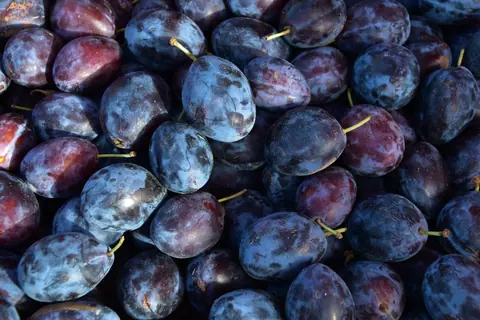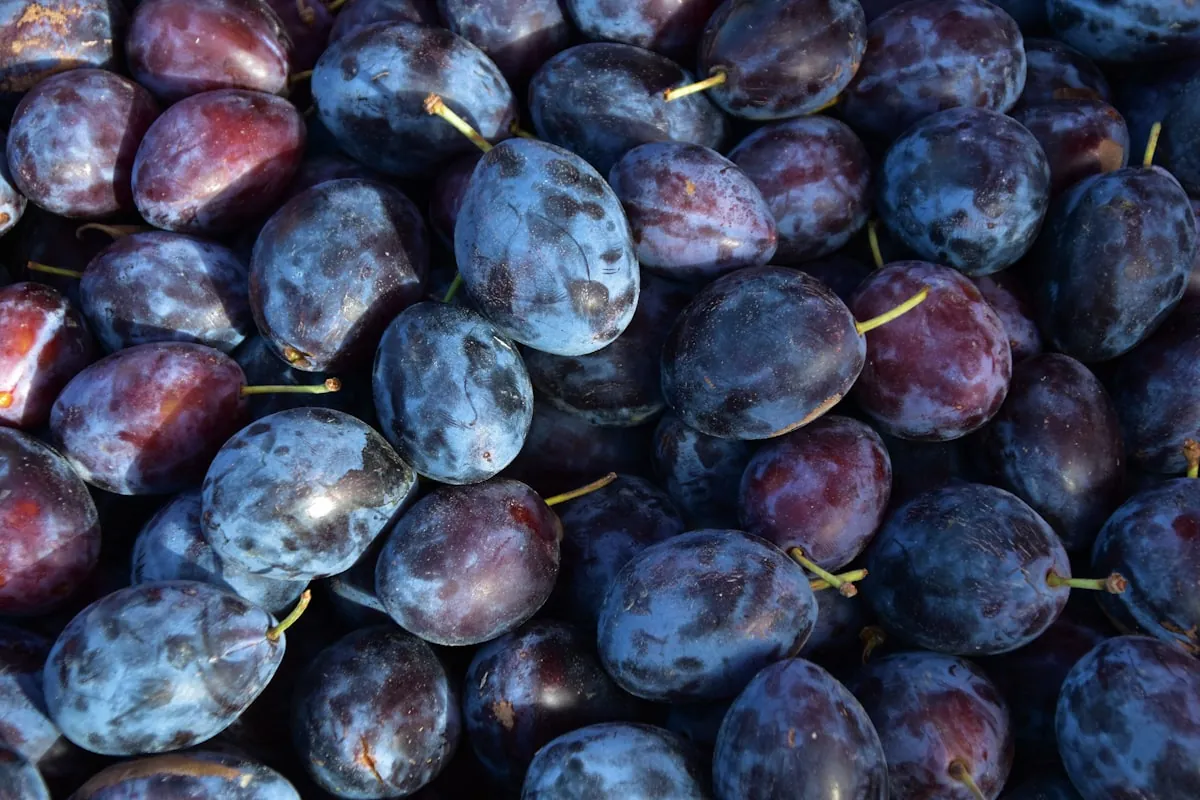
MC Sarıkaya Gıda sources native plum varieties, led by Seker, Can, Turbe, and Murdum from various production regions across Turkey, puts it through quality control, and supplies it to domestic and export markets. You can check the harvest calendar below for current supply availability.
Plum is sourced from various growing regions across Turkey, particularly Hatay, Adana, Mersin, İzmir, Manisa, Bursa, Isparta; drawing on multiple regions helps keep supply steady and quality consistent throughout the season.
The plum originates from the Caucasus and Central Asia and has been grown on Anatolian soil since very ancient times; the rich diversity of local varieties, ranging from Seker plum to Murdum plum, points to a cultivation tradition spanning different climate zones for centuries.
Product Overview
Sizes & Calibers
| Caliber (mm) | Range |
|---|---|
| 35-40 mm | Minimum band for Extra and Class I (large-fruited varieties) |
| 40-45 mm | Small-medium caliber |
| 45-50 mm | Medium caliber |
| 50-55 mm | Medium-large caliber |
| 55-60 mm | Large caliber |
| 60 mm+ | Extra-large caliber |
Packaging Options
- 30×50×10 cm single-layer carton2-3 kg net, 144 boxes on a 100×120 cm pallet
- 2.5 kg perforated carton boxSmall-pack option
- 30×40 cm carton box5 kg net, wholesale shipment format
Featured Varieties
Named for its high sugar content, this small-fruited native variety is one of the earliest-ripening plum varieties of the season, reaching market in late April-May, with the exact harvest time varying by region and altitude.
One of the first plum varieties to reach the market, in late April and May; it has a pronounced tart flavor while green, which is why it is traditionally also eaten salted, and grows sweeter as it ripens on the tree.
A mid-season variety notable for its large, colorful fruit; it is quite tart if picked before full ripeness, so it is harvested once it reaches full color and flavor on the tree.
Known for its purple-to-red color tones and also called black plum, red plum, or Bardak (cup) plum locally for its goblet-like shape, this late-season variety has juicy, aromatic flesh suited to both fresh eating and drying.
A European-origin late-season export variety; its large, oval, dark purple fruit has firm flesh and travels well, and with cold storage the season can be extended to the end of October.
Known for its dark purple-black skin and firm yellow flesh, this globally popular export variety's balanced sweet-tart aroma suits long-distance shipping.
One of the latest plum varieties of the season; its dark purple-black skin and firm, juicy flesh give it excellent storage life.
The most popular of the Can-group green plums; its yellow-green, 25-30 g fruit is picked green from late April through May (late May-early June in Niğde) for fresh eating and is not suited to storage.
A Kastamonu speciality protected by the Türk Patent geographical indication 'Kastamonu Üryani Eriği'; this yellow-green, medium-to-large native variety's high dry-matter content suits it to both fresh eating and drying (into 'üryani').
Growing & Harvest
The plum tree tolerates a wide range of climates, so it can be grown in regions as varied as the warm plains of Hatay, Adana, and Mersin and the temperate climate of İzmir, Manisa, and Bursa; this diversity allows the harvest season to stretch from spring into autumn. Early varieties are eaten while still green with a tart flavor, while late varieties are picked once they reach full color and high sugar content on the tree. Because of its soft, delicate texture, plum is generally hand-picked in several passes and requires careful handling after harvest.
Uses & Applications
Plum is mainly eaten fresh; tart early varieties are sometimes salted or steeped in brine, a traditional method that balances the fruit's sourness. Ripe, sweet varieties are eaten fresh, and plums are also widely used to make dried plums, jam, marmalade, and compote. Rapid cooling after harvest and cold-chain storage play an important role in preserving the freshness and texture of this soft fruit.
Frequently Asked Questions
Does MC Sarıkaya Gıda export plum?
Yes, MC Sarıkaya Gıda supplies native plum varieties, led by Seker, Can, Turbe, and Murdum to both domestic and export markets. You can check our seasonal calendar page for the current harvest period, or contact us directly.
What packaging is used to ship Plum?
Shipments of Plum typically use 30×50×10 cm single-layer carton or 2.5 kg perforated carton box, in line with standard industry practice; alternative packaging options can be arranged upon request.
What is the minimum order quantity for Plum?
For road shipments, orders start from one pallet per product within a mixed load; sea shipments are planned on a full 40' reefer container basis. Send us your product, target country and delivery date for an exact quantity and quote.
What is the shelf life and storage requirement for Plum?
Plum is delicate with a relatively short shelf life; rapid pre-cooling after harvest and an unbroken cold chain during transport are key to preserving freshness.
How is Plum sorted and quality-checked before shipment?
Before shipment, products are checked for size, color, and ripeness; anything below standard is sorted out, so only export-quality batches are shipped.