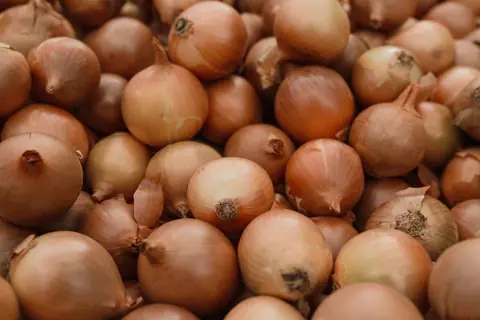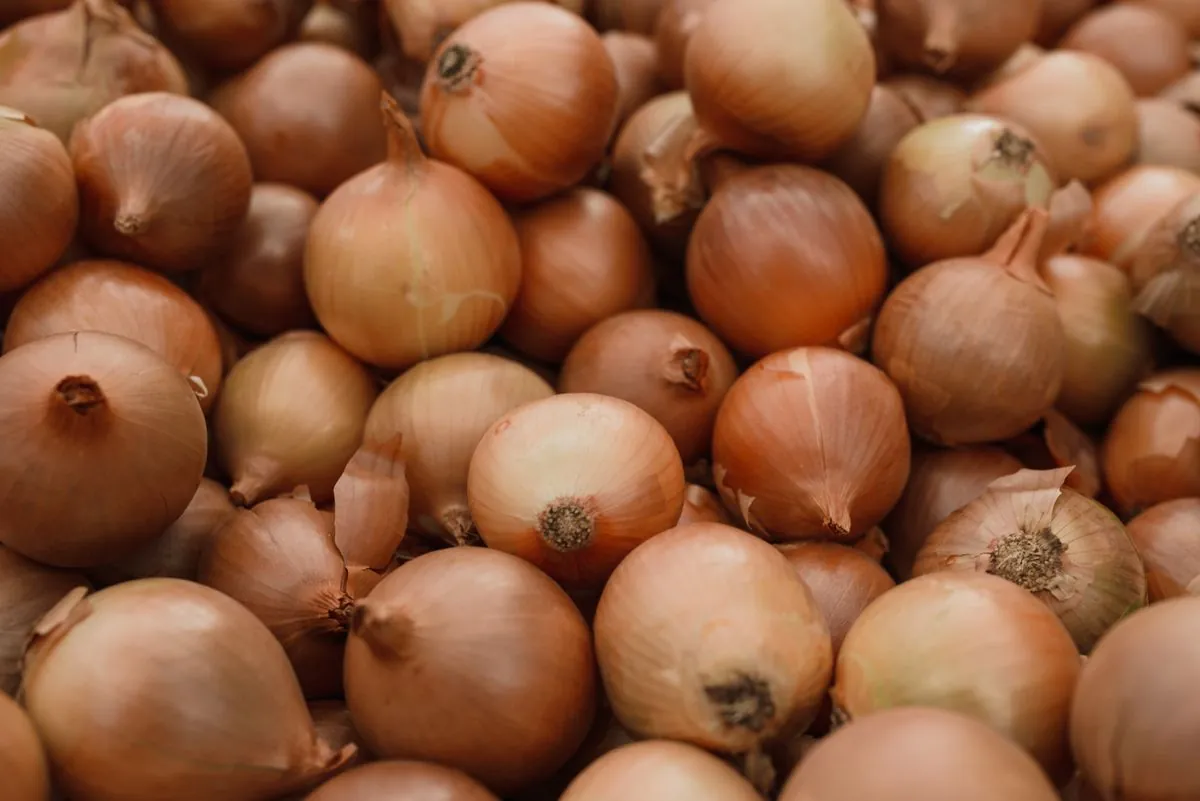
MC Sarıkaya Gıda sources dry onion, stored after harvest and offered for sale year-round from various production regions across Turkey, puts it through quality control, and supplies it to domestic and export markets. You can check the harvest calendar below for current supply availability.
Dry Onion is sourced from various growing regions across Turkey, particularly Ankara, Adana, Hatay, Çorum, Amasya; drawing on multiple regions helps keep supply steady and quality consistent throughout the season.
The onion is one of the staple crops of Anatolian agriculture with a history stretching back thousands of years; its excellent storability means it can be consumed year-round.
Product Overview
Sizes & Calibers
| Diameter (mm) | Range |
|---|---|
| 40-60 mm | Small-medium caliber |
| 60-80 mm | Medium-large caliber, standard market size |
| 80-100 mm | Large caliber |
Packaging Options
- 10/25 kg mesh bagVentilated, palletized shipping; per Turkish Ministry of Trade regulation (Official Gazette 9 Jan 2025/32777), wholesale/retail packaging is capped at 30 kg as of 1 Jan 2026
- 5 kg small mesh bagRetail/shelf format
- Jumbo bag (1,000-1,250 kg)For industrial/export shipment on request; the 30 kg cap applies to wholesale/retail domestic-market packaging
Featured Varieties
A variety with golden-brown, papery skin, a sharp aroma, and firm texture. Its long storage life and resilience under cooking make it the most widely used onion type in everyday kitchens.
A variety with purple-red skin and a relatively milder, slightly sweet flavor. Its striking color and mellow taste make it a favorite for salads, mezze, and garnishes when eaten raw.
Growing & Harvest
Dry onion is grown in open fields across the plains of Adana and Hatay, from seed or transplanted seedlings, as an early ('turfanda') crop; Turkey's main-volume dry onion production, by contrast, is concentrated in central Anatolia, led by Ankara and Amasya, forming the backbone of year-round supply. Well-drained soil and consistent sun exposure are important for healthy bulb development. The plant is considered mature once its leaves yellow and fall over, and harvest is timed accordingly. After harvest, the bulbs become storage-ready as their skin hardens and the outer layers dry out — a curing process that enables long-term storage.
Uses & Applications
Dry onion is a base flavor ingredient in nearly every Turkish dish, used raw in salads and mezze and cooked as the sautéed base of stews. Yellow onion, with its sharp flavor and long shelf life, is favored for cooking, while red onion, being milder and slightly sweeter, is considered better suited to raw eating and salads. Well-cured, firm onions with dry skin can be stored for extended periods in mesh bags under cool, well-ventilated conditions.
Frequently Asked Questions
Does MC Sarıkaya Gıda export dry onion?
Yes, MC Sarıkaya Gıda supplies dry onion, stored after harvest and offered for sale year-round to both domestic and export markets. You can check our seasonal calendar page for the current harvest period, or contact us directly.
What packaging is used to ship Dry Onion?
Shipments of Dry Onion typically use 10/25 kg mesh bag or 5 kg small mesh bag, in line with standard industry practice; alternative packaging options can be arranged upon request.
What is the minimum order quantity for Dry Onion?
For road shipments, orders start from one pallet per product within a mixed load; sea shipments are planned on a full 40' reefer container basis. Send us your product, target country and delivery date for an exact quantity and quote.
What is the shelf life and storage requirement for Dry Onion?
Dry Onion is a hardy product that can be stored for a long time in cool, dry conditions; under proper storage, its shelf life is markedly longer than many fresh products.
How is Dry Onion sorted and quality-checked before shipment?
Before shipment, products are checked for size, color, and ripeness; anything below standard is sorted out, so only export-quality batches are shipped.