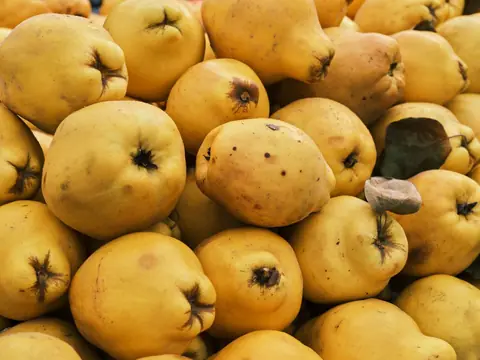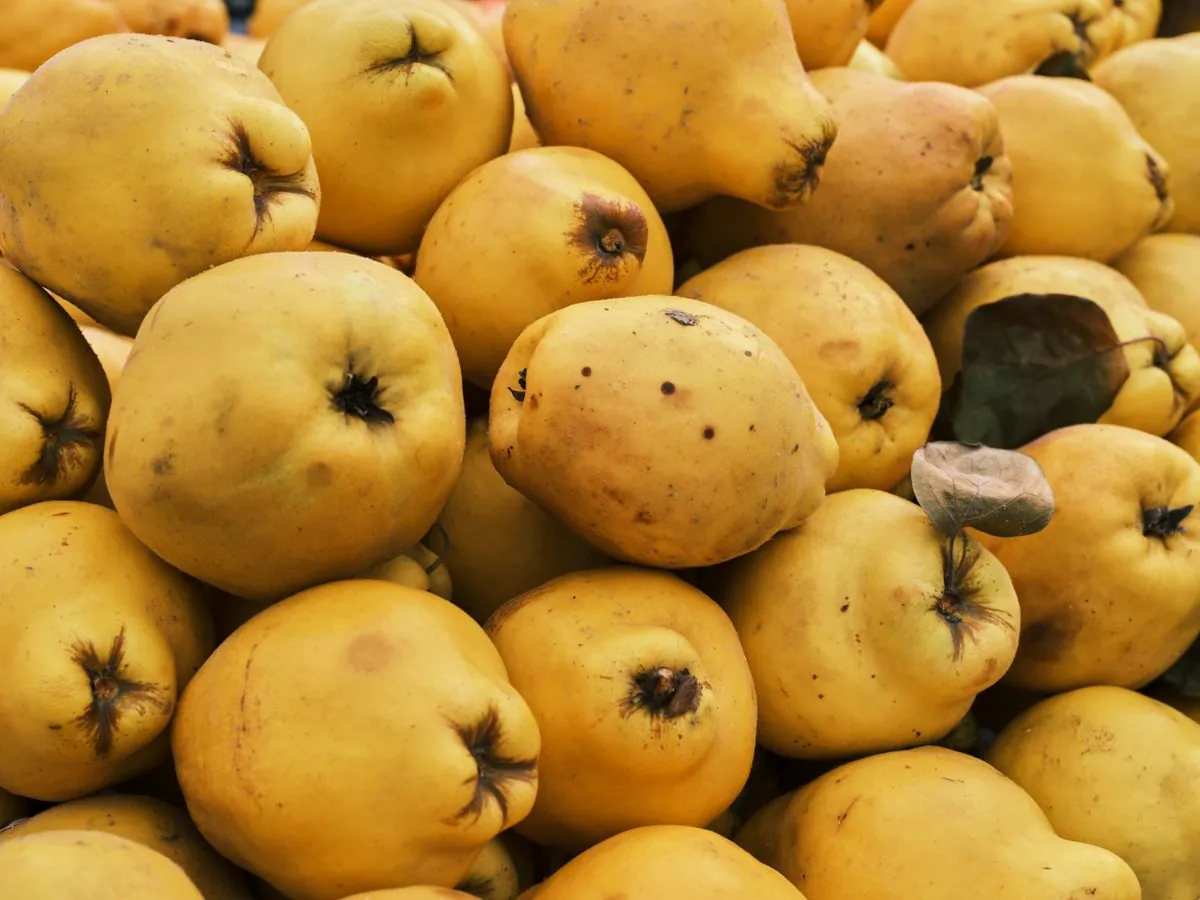
MC Sarıkaya Gıda sources quince varieties led by Eşme quince, a leading export variety from various production regions across Turkey, puts it through quality control, and supplies it to domestic and export markets. You can check the harvest calendar below for current supply availability.
Quince is sourced from various growing regions across Turkey, particularly Sakarya, Bursa, Antalya, Denizli, Uşak; drawing on multiple regions helps keep supply steady and quality consistent throughout the season.
The quince is an ancient fruit believed to originate from Anatolia and the Caucasus; it has earned a special place on winter tables and in desserts.
Product Overview
Sizes & Calibers
| Caliber (count/box) | Range |
|---|---|
| 14 | Large caliber, in a 6-7 kg box |
| 16-18 | Medium caliber, standard market size |
| 20 | Small caliber |
Packaging Options
- 40×55×11 cm single-layer carton6-7 kg net, 72 boxes on a 100×120 cm pallet
- Double-wall (moisture-resistant) cartonPreferred alternative given quince's sensitivity to moisture
Featured Varieties
A medium-to-large, round, broad-bellied variety narrowing toward the stalk, with golden-yellow skin; its firm flesh and distinctive aroma suit it to both fresh table use and jam and dessert making, and its long storage life makes it the most widely exported quince variety.
A large, pear-shaped variety with a narrow stem end, wide belly and yellow skin; its firm structure allows it to be kept in storage through the winter months and consumed during that period.
Growing & Harvest
The quince tree does well in regions with cold winters and mild summers; Sakarya's Geyve basin alone grows more than half of Turkey's quince, with Bursa, Denizli, Bilecik and Antalya as the other main production areas. Fruit is considered ready for harvest once the skin turns yellow and its characteristic aroma becomes pronounced; a quince largely keeps its firm texture after ripening, which makes it relatively tolerant of post-harvest transport. Harvest is generally done by hand in the autumn.
Uses & Applications
Unlike apples and pears, quince is a fruit that is mostly cooked rather than eaten raw; it is widely used for jam, marmalade, desserts, and compotes, and also features in savory dishes. Its firm flesh and low moisture content let it keep well in cold storage for a long time, which allows it to reach the market throughout the winter months.
Frequently Asked Questions
Does MC Sarıkaya Gıda export quince?
Yes, MC Sarıkaya Gıda supplies quince varieties led by Eşme quince, a leading export variety to both domestic and export markets. You can check our seasonal calendar page for the current harvest period, or contact us directly.
What packaging is used to ship Quince?
Shipments of Quince typically use 40×55×11 cm single-layer carton or Double-wall (moisture-resistant) carton, in line with standard industry practice; alternative packaging options can be arranged upon request.
What is the minimum order quantity for Quince?
For road shipments, orders start from one pallet per product within a mixed load; sea shipments are planned on a full 40' reefer container basis. Send us your product, target country and delivery date for an exact quantity and quote.
What is the shelf life and storage requirement for Quince?
With its firm skin, Quince can be stored for longer than many other fruits; proper cold-storage conditions can extend shelf life significantly.
How is Quince sorted and quality-checked before shipment?
Before shipment, products are checked for size, color, and ripeness; anything below standard is sorted out, so only export-quality batches are shipped.