
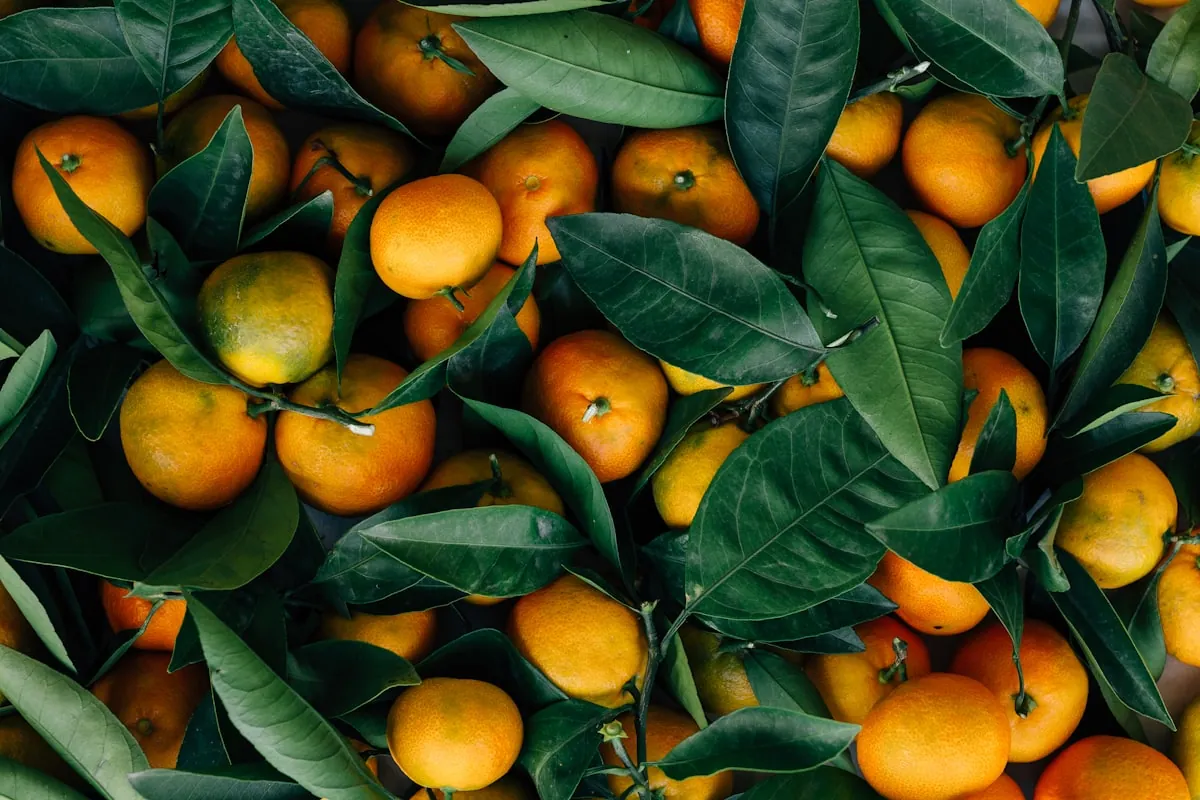
MC Sarıkaya Gıda sources mandarin, one of the most sought-after citrus varieties from various production regions across Turkey, puts it through quality control, and supplies it to domestic and export markets. You can check the harvest calendar below for current supply availability.
Mandarin is sourced from various growing regions across Turkey, particularly Mersin, Adana, Hatay, Antalya, İzmir; drawing on multiple regions helps keep supply steady and quality consistent throughout the season.
The mandarin's homeland is Southeast Asia; citrus trees that reached the Mediterranean coast during the Ottoman era gradually became an indispensable part of Turkey's winter fruit culture.
Product Overview
Sizes & Calibers
| Size Code (mm) | Range |
|---|---|
| 1-XXX | 78 mm and above |
| 1-XX | 67-78 mm |
| 1 / 1-X | 63-74 mm |
| 2 | 58-69 mm |
| 3 | 54-64 mm |
| 4 | 50-60 mm |
| 5 | 46-56 mm |
| 6 | 43-52 mm |
| 7 | 41-48 mm |
| 8 | 39-46 mm |
| 9 | 37-44 mm |
| 10 | 35-42 mm |
Packaging Options
- 5 kg corrugated cartonVentilated, palletized shipping
- 40×30×18 cm carton10 kg net, 100 boxes on a 100×120 cm pallet
- 10/15 kg carton or mesh bagBulk shipment on a 100×120 cm pallet
- 1-2 kg retail mesh or flow-packShelf-ready packing on request
Featured Varieties
One of the earliest-ripening varieties in the Japanese Satsuma group, Miho Wase opens the season with a thin peel and a sweet, low-acid flesh, harvested ahead of the rest.
An early-season Satsuma type of Japanese origin, Okitsu stands out for its thin peel and seedless flesh; similar to standard Satsuma but ripening slightly earlier, it reaches the market among the season's first mandarins.
A cross between Miho Wase Satsuma and the Carvalhais mandarin, Primasol is an early-season variety that ripens a few days after Okitsu; its firm, juicy segments are nearly seedless, with a flavor close to Okitsu's but less acidic.
With its thin, loose peel that comes away easily, Satsuma is a seedless mandarin with a soft, juicy flesh, popular especially early in the season.
A bud mutation of Owari Satsuma, Dobashi Beni is set apart from other Satsuma types by its deep orange-red peel; it is a seedless, sweet-fleshed variety harvested mid-season.
Known for its glossy orange peel and pronounced aroma, Clementine is a seedless, well-balanced sweet-tart mandarin variety favored widely around the world.
A cross between Clementine and the Ponkan mandarin, Fremont is a mid-season variety with a glossy orange peel, easy peeling, and a rich, sweet aroma, prized for its long shelf life.
A cross between Clementine and the Orlando tangelo, Robinson is a sibling variety of Nova from the same parent cross; its glossy orange-red peel and easy-peel habit make it one of the season's first mandarins, harvested in October.
A cross between Clementine and the Orlando tangelo, Nova is a mid-season variety distinguished by its vivid orange-red peel and rich, sweet flavor.
One of the last mandarins to be picked each season, W.Murcott stands out in the market from late winter into spring thanks to its thin peel, few seeds, and high sugar content.
A mandarin-grapefruit hybrid (tangelo), Minneola is easily recognized by the characteristic neck at its stem end and deep orange color; its juicy, aromatic, slightly tart fruit comes to harvest in late winter.
A seedless mutation of W.Murcott produced through irradiation, Tango stays seedless even when grown near other citrus; with its easy-peeling skin and rich, sweet flavor, it ranks among the latest mandarins of the season.
Growing & Harvest
Mandarins are grown in open-field orchards along the Mediterranean coastal belt, where mild winters and long hours of sunshine reduce the risk of frost; greenhouse cultivation is not common for citrus. It typically takes a few years after planting before a tree bears its first meaningful crop, with full yields following as the tree matures. Fruit is picked by hand with clippers to avoid bruising and protect the peel, with each variety harvested within its own ripeness window based on peel color and sugar-acid balance.
Uses & Applications
Mandarins are grown mainly for fresh table consumption; their easy-peel habit and seedless varieties make them a convenient eating fruit, and they are also used in desserts, salads, and juice. Export buyers generally look for uniform size, glossy peel, and good shelf life; cold storage and careful handling after harvest are key to keeping the peel and fruit quality intact.
Frequently Asked Questions
Does MC Sarıkaya Gıda export mandarin?
Yes, MC Sarıkaya Gıda supplies mandarin, one of the most sought-after citrus varieties to both domestic and export markets. You can check our seasonal calendar page for the current harvest period, or contact us directly.
What packaging is used to ship Mandarin?
Shipments of Mandarin typically use 5 kg corrugated carton or 40×30×18 cm carton, in line with standard industry practice; alternative packaging options can be arranged upon request.
What is the minimum order quantity for Mandarin?
For road shipments, orders start from one pallet per product within a mixed load; sea shipments are planned on a full 40' reefer container basis. Send us your product, target country and delivery date for an exact quantity and quote.
What is the shelf life and storage requirement for Mandarin?
Thanks to its peel, Mandarin keeps longer than many fresh products; cold-chain transport is still recommended to preserve export quality.
How is Mandarin sorted and quality-checked before shipment?
Before shipment, products are checked for size, color, and ripeness; anything below standard is sorted out, so only export-quality batches are shipped.
Related Products
Related Articles
Turkish Mandarin Season 2026-27: Varieties, Calendar and Export Outlook
Sourced 2026-27 outlook for Turkish mandarin: TÜİK and USDA FAS forecasts, the September-April variety calendar, last season's exports and shipping specs.
Product GuideWhat Is a Satsuma Mandarin, and What Makes It Different?
The origin, thin skin, and seedless flesh of the Satsuma mandarin, its October-to-February harvest window, and the export grading standards buyers check.