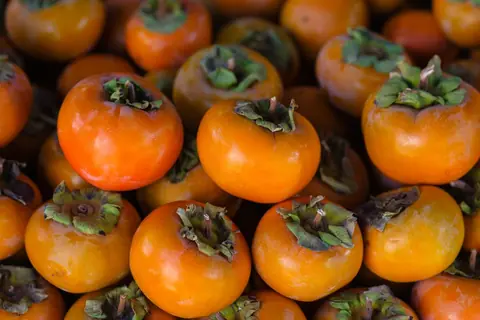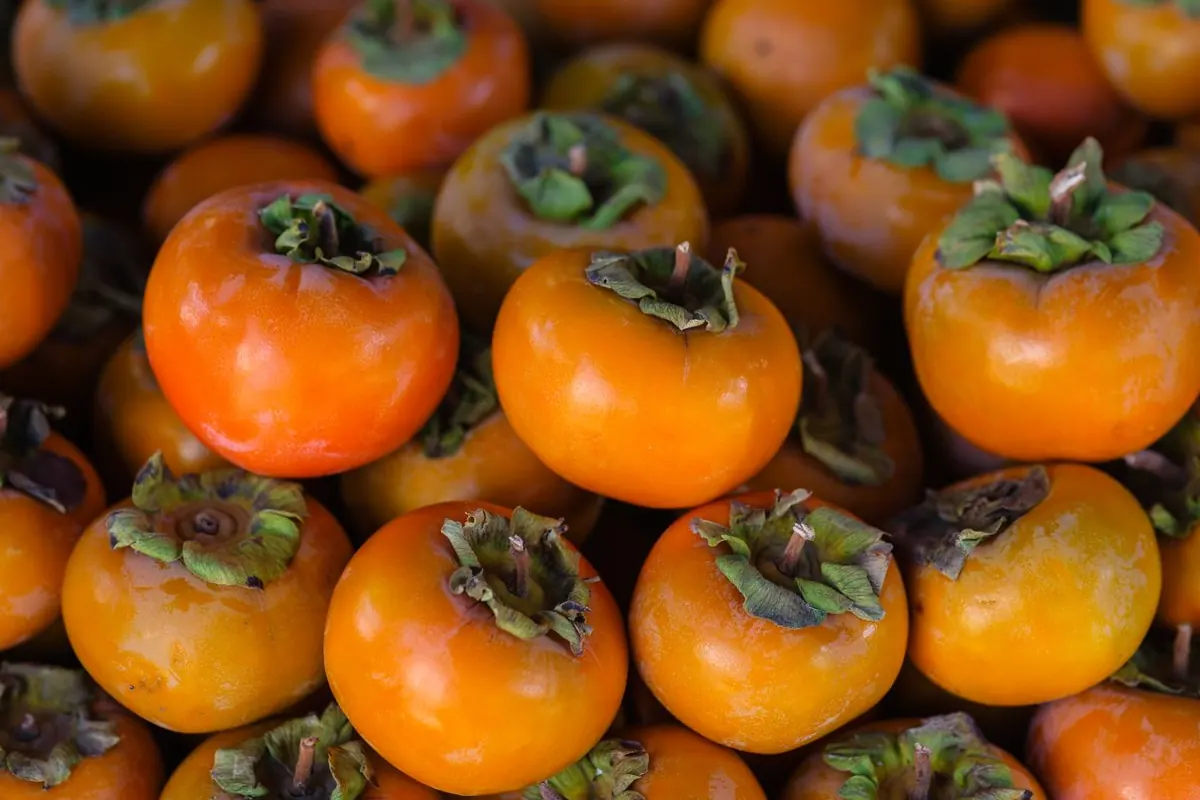
MC Sarıkaya Gıda sources persimmon, the fruit of autumn from various production regions across Turkey, puts it through quality control, and supplies it to domestic and export markets. You can check the harvest calendar below for current supply availability.
Persimmon is sourced from various growing regions across Turkey, particularly Adana, Mersin, Antalya, Hatay, Adıyaman, Denizli; drawing on multiple regions helps keep supply steady and quality consistent throughout the season.
The persimmon originated in East Asia and entered Anatolia via the Black Sea, which gave the fruit its Turkish name 'Trabzon hurması'; today production has shifted mainly to the Mediterranean region, and the fruit — also known locally as 'paradise fruit' — has become one of the emblems of the autumn table.
Product Overview
Sizes & Calibers
| Weight (g) | Range |
|---|---|
| 50-90 g | Small caliber |
| 90-125 g | Small-medium caliber |
| 125-190 g | Medium caliber |
| 190-220 g | Medium-large caliber |
| 220-300 g | Large caliber, typical commercial weight (6-8 cm diameter) |
Packaging Options
- 30×50×10 cm single-layer carton3-4 kg net, each fruit individually cushioned in a tray, 144 boxes on a 100×120 cm pallet
Featured Varieties
This non-astringent type can be eaten while still firm, like an apple; its squat round shape, bright orange skin, and crisp flesh make it the main item of fresh exports, and it travels relatively well.
The classic heart-shaped, large-fruited type; astringent at harvest, the fruit turns intensely sweet and aromatic once fully soft, and is traditionally used for ripe eating and drying.
Growing & Harvest
The persimmon thrives in temperate climates; after the tree drops its leaves in autumn, the bright orange fruit remains visible on the branches. The long, mild autumns of Adana, Mersin, Antalya, and Hatay allow full color and flavor development, and Adıyaman and Denizli (Honaz) also hold a significant share of production. Harvest is done with clippers, stem attached, when the fruit has full color but is still firm; astringent types are consumed once fully softened, while non-astringent Fuyu types can be eaten crisp like an apple. Because the skin is delicate, single-layer tray packing is preferred.
Uses & Applications
Persimmons are consumed mainly fresh: firm Fuyu types are sliced or bitten like an apple, while astringent Hachiya types are eaten with a spoon once fully soft. The fruit is also dried, keeping through the winter in dried form. Rapid pre-cooling after harvest and cold-chain transport at 0-1°C are key to preserving fruit quality; cold storage extends the supply window to the end of December, and individually protected tray packaging is the export standard.
Frequently Asked Questions
Does MC Sarıkaya Gıda export persimmon?
Yes, MC Sarıkaya Gıda supplies persimmon, the fruit of autumn to both domestic and export markets. You can check our seasonal calendar page for the current harvest period, or contact us directly.
What packaging is used to ship Persimmon?
Shipments of Persimmon typically use 30×50×10 cm single-layer carton, in line with standard industry practice; alternative packaging options can be arranged upon request.
What is the minimum order quantity for Persimmon?
For road shipments, orders start from one pallet per product within a mixed load; sea shipments are planned on a full 40' reefer container basis. Send us your product, target country and delivery date for an exact quantity and quote.
What is the shelf life and storage requirement for Persimmon?
With its firm skin, Persimmon can be stored for longer than many other fruits; proper cold-storage conditions can extend shelf life significantly.
How is Persimmon sorted and quality-checked before shipment?
Before shipment, products are checked for size, color, and ripeness; anything below standard is sorted out, so only export-quality batches are shipped.