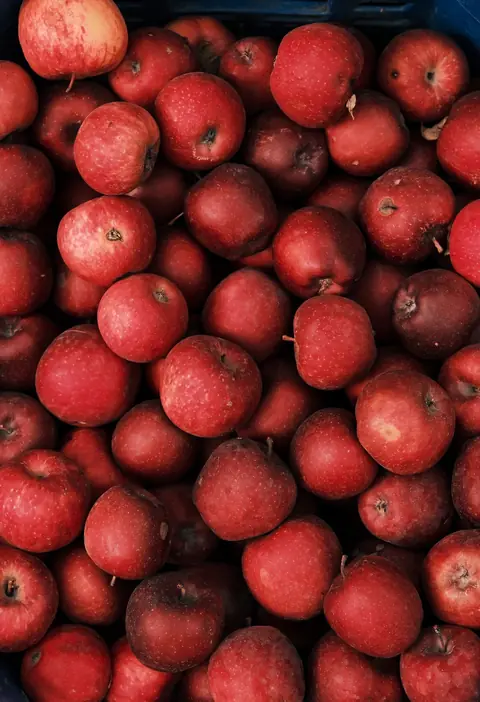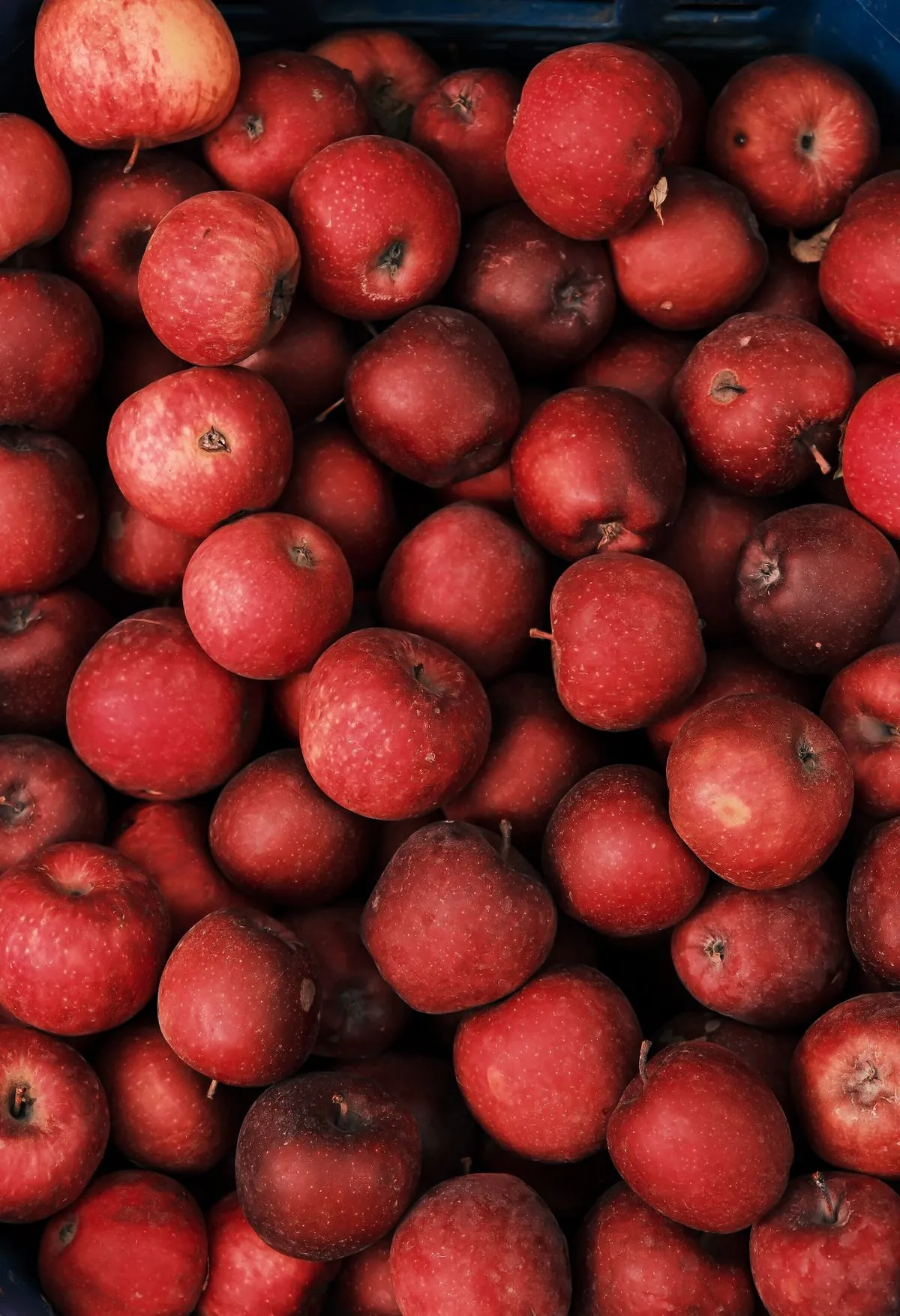
MC Sarıkaya Gıda sources apple varieties that keep well in long-term storage from various production regions across Turkey, puts it through quality control, and supplies it to domestic and export markets. You can check the harvest calendar below for current supply availability.
Apple is sourced from various growing regions across Turkey, particularly Isparta, Karaman, Niğde, Antalya, Denizli, Konya, Kayseri; drawing on multiple regions helps keep supply steady and quality consistent throughout the season.
The wild ancestors of the apple are thought to have evolved across a geography stretching from Central Asia to Anatolia; Anatolia has long been an important center of apple cultivation.
Product Overview
Sizes & Calibers
| Diameter (mm) | Range |
|---|---|
| 92 mm | Count 48 — ~405 g, largest caliber |
| 89 mm | Count 56 — ~355 g |
| 86 mm | Count 64 — ~300 g |
| 84 mm | Count 72 — ~265 g |
| 81 mm | Count 80 — ~240 g |
| 78 mm | Count 88 — ~215 g |
| 74 mm | Count 100 — ~190 g |
| 72 mm | Count 113 — ~165 g |
| 70 mm | Count 125 — ~155 g |
| 68 mm | Count 138 — ~135 g |
| 67 mm | Count 150 — ~130 g |
| 65 mm | Count 163 — ~115 g |
| 63 mm | Count 175 — ~110 g |
| 61 mm | Count 198 — ~95 g |
| 60 mm | Count 216 — ~90 g, smallest standard caliber |
Packaging Options
- 50×30×18 cm 2-layer carton10 kg net, 10 layers × 8 boxes = 80 boxes on a 100×120 cm pallet
- 34×50×28 cm 4-layer telescopic carton18 kg net, 7 layers × 6 boxes = 42 boxes on a 100×120 cm pallet
- 40×33×28 cm carton18 kg net, 80-210 fruits per box depending on caliber
- 40×60×20 cm plastic crate12 kg net, alternative for domestic market and short-haul shipment
Featured Varieties
A New Zealand-origin, early season variety known for its yellowish skin with red stripes; its crisp flesh and well-balanced sweet flavor make it one of the first apples of the season, harvested in August in regions like Isparta; it has a much shorter marketing window than the later varieties, typically August through October.
Recognized for its dark red skin and characteristic elongated shape with five bumps at the base; its sweet flavor and crisp flesh make it a fresh-eating variety, and its good storage life keeps it on the export market from October through the following June.
A medium-to-large variety with yellow-green skin and a sweet flavor; its juicy, crisp flesh suits both fresh eating and baking, and its good storage life typically keeps it on the export market from September through the following February.
A bright green-skinned variety with a pronounced tart flavor and firm flesh; its acidity makes it popular both for fresh eating and in desserts and baking; one of the best-storing apple varieties, typically on the export market from October through the following May.
One of Anatolia's oldest local apple varieties (GI: Amasya Misket Elması), Amasya is known for its medium size, red stripes and blush over a yellow-green ground, and intensely aromatic flesh; harvested in late September, it holds a special place in the traditional domestic market.
Of Japanese origin, Fuji is one of the most widely consumed apple varieties worldwide; its firm, crisp, very juicy flesh has a high sugar content. Harvested in October, its good storage life keeps it on the export market from October through the following June.
Of New Zealand origin, Braeburn is known for its red-orange striped skin and balanced sweet-tart flavor; its firm, crisp flesh gives it a storage life of 8-10 months in controlled atmosphere, and it is harvested between October and November.
An Australian-origin, late-season variety with pink-red skin and a pronounced flavor from its high sugar-acid balance; it is one of the latest-harvested apples, with harvest running from late October into November, and its good storage life keeps it on the export market from October through the following May. Unlike most other varieties, it is prone to chilling injury and should be kept toward the warmer end of the storage range rather than near 0°C.
Growing & Harvest
Apples need winter chilling and develop better color and sugar content in areas with a marked difference between day and night temperatures; Isparta, Karaman, and Niğde are Turkey's leading apple-producing provinces, with the cool inland elevations of Antalya and Denizli, Konya, and Kayseri serving as important complementary production areas. Fruit is generally hand-picked; harvest timing varies by variety but is guided by criteria such as ground color, firmness, and sugar content. Apples picked at the right time and kept under good cold-storage conditions can stay fresh for months.
Uses & Applications
Beyond fresh eating, apples have a wide range of uses, including juice, molasses, dried apple, and baking. Varieties kept in controlled-atmosphere cold storage can reach the market year-round, not just during the harvest season, which is part of why apples are known for their long shelf life.
Frequently Asked Questions
Does MC Sarıkaya Gıda export apple?
Yes, MC Sarıkaya Gıda supplies apple varieties that keep well in long-term storage to both domestic and export markets. You can check our seasonal calendar page for the current harvest period, or contact us directly.
What packaging is used to ship Apple?
Shipments of Apple typically use 50×30×18 cm 2-layer carton or 34×50×28 cm 4-layer telescopic carton, in line with standard industry practice; alternative packaging options can be arranged upon request.
What is the minimum order quantity for Apple?
For road shipments, orders start from one pallet per product within a mixed load; sea shipments are planned on a full 40' reefer container basis. Send us your product, target country and delivery date for an exact quantity and quote.
What is the shelf life and storage requirement for Apple?
With its firm skin, Apple can be stored for longer than many other fruits; proper cold-storage conditions can extend shelf life significantly.
How is Apple sorted and quality-checked before shipment?
Before shipment, products are checked for size, color, and ripeness; anything below standard is sorted out, so only export-quality batches are shipped.