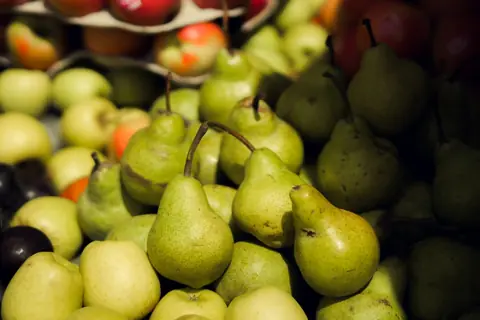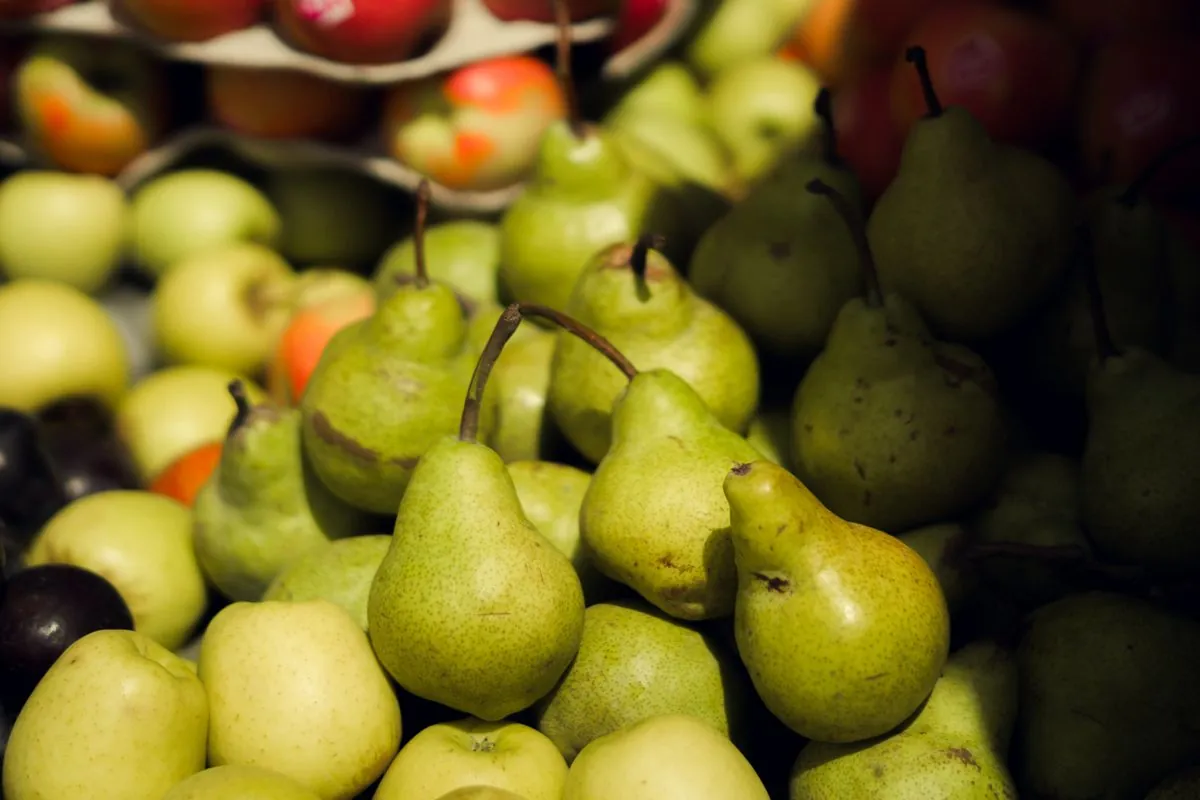
MC Sarıkaya Gıda sources pear varieties led by Akca, Santa Maria, and Deveci from various production regions across Turkey, puts it through quality control, and supplies it to domestic and export markets. You can check the harvest calendar below for current supply availability.
Pear is sourced from various growing regions across Turkey, particularly İzmir, Manisa, Bursa, Sakarya, Ankara; drawing on multiple regions helps keep supply steady and quality consistent throughout the season.
The pear is one of the oldest fruit species cultivated in Anatolia for thousands of years; wild pear species are part of the natural flora of the Caucasus and Anatolia.
Product Overview
Sizes & Calibers
| Diameter (mm) | Range |
|---|---|
| 55-60 mm | Small-medium caliber, Class I-II |
| 60-70 mm | Medium caliber, Extra Class lower band |
| 70-95 mm | Large caliber, Extra Class standard market size |
Packaging Options
- Single-layer tray 40×60×10 cm7 kg net, 80 trays on a 100×120 cm pallet
- Single-layer tray 30×50×10 cm4-5 kg net, 144 trays on a 100×120 cm pallet
- 70-count carton trayPre-retail preparation, 70 fruits per box
Featured Varieties
Turkey's classic early-season pear, Akca bears small-to-medium, yellow-green, juicy fruit and is among the first pears to reach the market in late June.
An early-to-mid-season variety with yellow-green skin, juicy and distinctly aromatic; its soft, melting flesh makes it well suited to fresh eating.
A mid-season variety notable for its red-orange skin; its juicy, sweet flesh and eye-catching appearance make it stand out on the shelf.
Originating in England, Williams (Bartlett) is the global standard for pear trade — bell-shaped, yellow-green skinned, with very juicy, melting flesh; harvested in the Marmara region in late August, suited to both fresh eating and canning.
One of Anatolia's native pear varieties, Deveci is known for its large size, yellowish skin, and firm flesh; its sturdy structure allows long storage and consumption well into the winter months.
Grown in Central Anatolia's cool continental climate, this thin-skinned, juicy, aromatic native variety is smaller and more delicate than Deveci; harvested in autumn and kept through the winter months.
Growing & Harvest
Pear trees need winter chilling and do well in temperate-to-cool climates; the climate of İzmir, Manisa, Bursa, and Sakarya, which provides adequate winter chilling along with warm summers, supports growing varieties with different ripening times. Pears are generally picked before they are fully ripe on the tree, based on firmness and ground color; many varieties are then left to rest for a period after harvest to soften and develop their full aroma. This is why pears are counted among the fruits that continue ripening after being picked.
Uses & Applications
Pears are mostly eaten fresh; firm-fleshed, long-keeping varieties can be stored in cold storage for months, while juicier varieties are harvested for quicker consumption. Besides fresh eating, pears are also used in compotes, jams, and desserts. Ripening at the right temperature after harvest (for some varieties, resting at room temperature after coming out of cold storage) plays a large part in determining the pear's final aroma and texture quality.
Frequently Asked Questions
Does MC Sarıkaya Gıda export pear?
Yes, MC Sarıkaya Gıda supplies pear varieties led by Akca, Santa Maria, and Deveci to both domestic and export markets. You can check our seasonal calendar page for the current harvest period, or contact us directly.
What packaging is used to ship Pear?
Shipments of Pear typically use Single-layer tray 40×60×10 cm or Single-layer tray 30×50×10 cm, in line with standard industry practice; alternative packaging options can be arranged upon request.
What is the minimum order quantity for Pear?
For road shipments, orders start from one pallet per product within a mixed load; sea shipments are planned on a full 40' reefer container basis. Send us your product, target country and delivery date for an exact quantity and quote.
What is the shelf life and storage requirement for Pear?
With its firm skin, Pear can be stored for longer than many other fruits; proper cold-storage conditions can extend shelf life significantly.
How is Pear sorted and quality-checked before shipment?
Before shipment, products are checked for size, color, and ripeness; anything below standard is sorted out, so only export-quality batches are shipped.