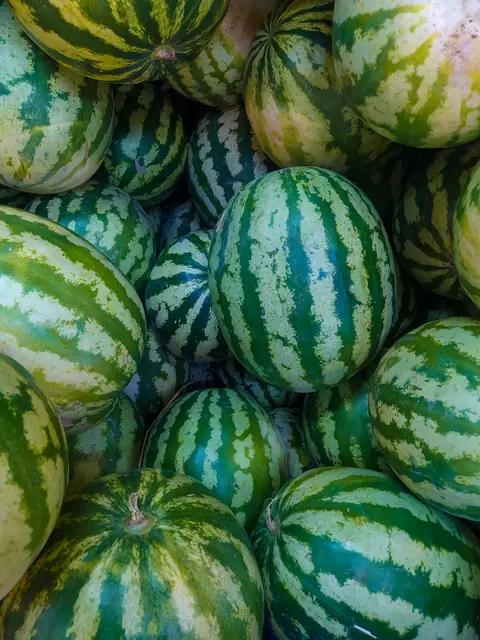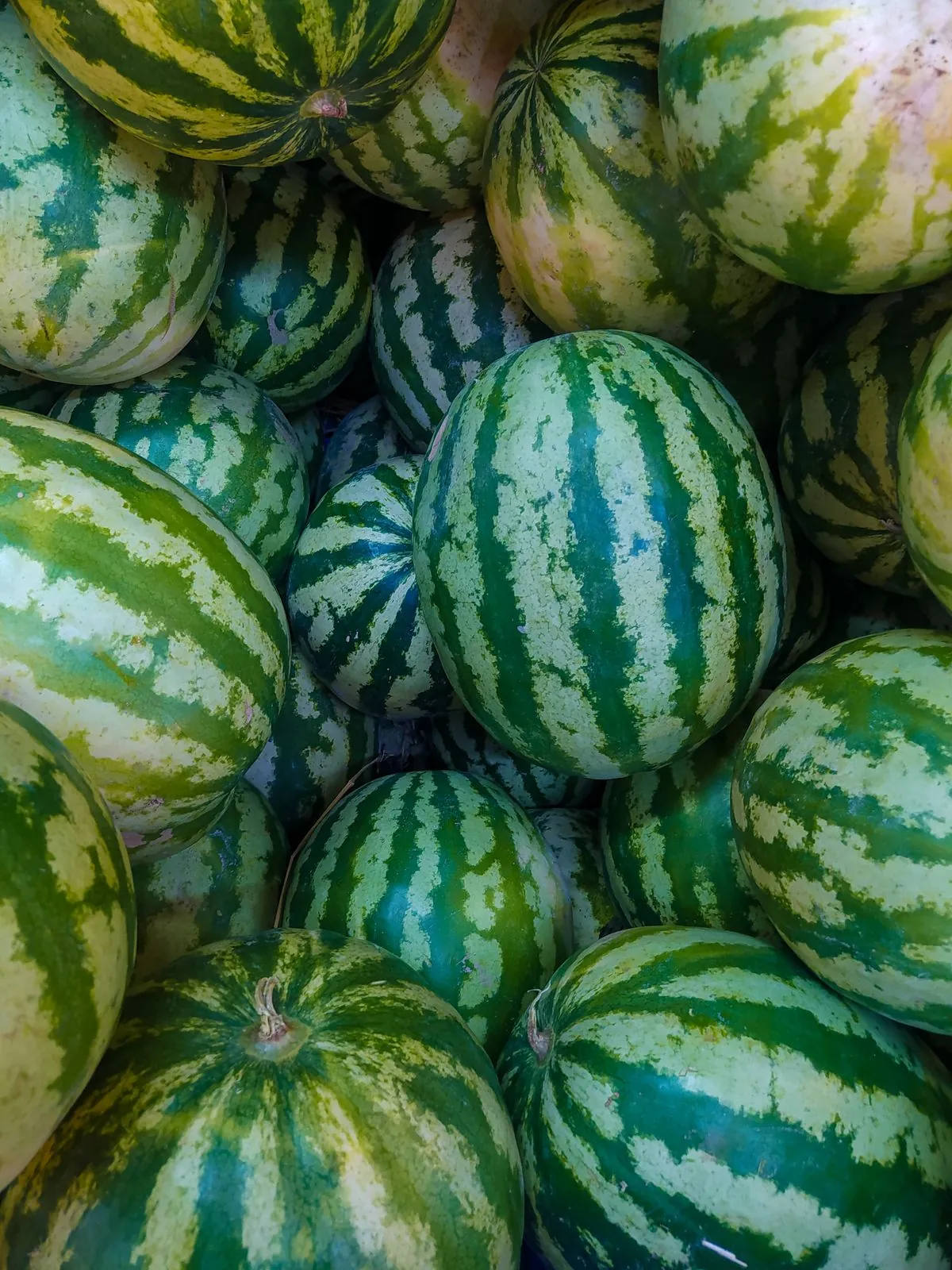
Field spot, sound, weight, shine, stem, and webbing: what each ripeness sign on a watermelon actually indicates, and why.
A watermelon gives no external clue as reliable as cutting it open — which is exactly why buyers, from a household shopper to a supermarket produce buyer doing a spot-check on a pallet, rely on a small set of physical signs instead. Each of these signs has a real physical reason behind it, not just tradition.
The field spot: where the fruit rested on the soil
Every watermelon develops a "field spot" — the patch where it lay against the ground while ripening, shielded from direct sun. On a ripe fruit, this patch turns a deep, creamy yellow; on an unripe one, it stays pale or white. The color shift happens because the rind keeps developing pigment as the fruit matures, even in the shaded spot — so a white or faint field spot is a reliable sign the melon was picked before that process finished.
The sound test: what the thud is actually measuring
Tapping a watermelon and listening for a deep, resonant thud works because the sound is a rough proxy for water content and flesh density — a ripe watermelon's flesh has developed just enough to resonate differently than the denser, less juicy flesh of an unripe one. An overripe melon, by contrast, can produce a similarly dull thud paired with an oversized, over-yellowed field spot — which is why the sound test works best combined with the field spot check, not used alone.
Weight, shine, the stem, and webbing
A ripe watermelon should feel heavier than its size suggests, since water content (watermelon is roughly 92% water) accounts for most of its weight, and a well-hydrated fruit is a well-ripened one. Rind finish matters too: a dull, matte rind generally indicates ripeness, while a shiny rind often signals the fruit was picked too early. At the stem, a dried, browned, tightly shrunken stem means the fruit sat on the vine longer before harvest, unlike a thick green stem on an underripe melon. Finally, look for "webbing" — rough, brown, web-like scarring on the rind, which forms at points where bees pollinated the flower; more webbing generally correlates with a sweeter fruit, since it reflects a longer, more thorough pollination and growing period.
Why these signs matter for a supplier, not just a shopper
These are the same signs our own harvest teams check before cutting a single fruit from the vine — field spot color, stem condition, and the tap test are the same physical judgment described above, applied at scale across a harvest rather than one melon at a time. It is also why lycopene and citrulline content, covered in our watermelon nutrition guide, are highest in fruit harvested at the right moment rather than early.
Visit our Watermelon product page for variety, caliber, and packaging detail.
Frequently Asked Questions
What does a white field spot on a watermelon mean?
A white or faint field spot means the watermelon was likely picked before it fully ripened — a ripe watermelon's field spot turns a deep, creamy yellow.
Does a shiny watermelon rind mean it is fresh?
Not necessarily — a shiny rind often signals the fruit was picked too early; a dull, matte rind generally indicates ripeness.