Kırkağaç, Galia, Crimson Sweet and Black Pearl: how a region-by-region harvest keeps Turkish melon and watermelon in season from April to October.
Turkey ranks 2nd in the world in both melon and watermelon production according to FAO data, at roughly 3.2 million tons of watermelon (TÜİK 2024) and around 1.5-1.8 million tons of melon a year. That scale, combined with the country's geographic spread, is what lets these two heat-loving cucurbits stay in season for roughly six months rather than the six-to-eight weeks a single growing region would offer on its own.
A relay race across the map
The season opens in April with Antalya's protected, greenhouse-grown fruit, giving both crops an earlier start than open-field growing allows anywhere else in the country. By May, Adana's open-field harvest takes over — Adana alone accounts for roughly one-fifth of Turkey's entire watermelon output. As summer advances, harvesting shifts to İzmir and the inner regions, then on to Bursa, Bilecik, and Thrace, keeping supply uninterrupted into autumn. It is this handoff between regions, more than any single variety's harvest window, that gives buyers a supply calendar stretching from spring to early autumn.
Where this production actually goes
Germany, Russia and Poland together take roughly half of Turkey's watermelon export value (about 52% in IndexBox's 2023 trade data), and the same three countries, joined by Romania and Bulgaria, are the leading destinations for Turkish melon. That overlap is not a coincidence: both crops move by the same road and rail corridors north and east out of Turkey, benefiting from short transit times that keep a naturally heavy, high-water-content fruit economical to ship over land rather than by air.
Variety differences, and how ripeness is actually judged
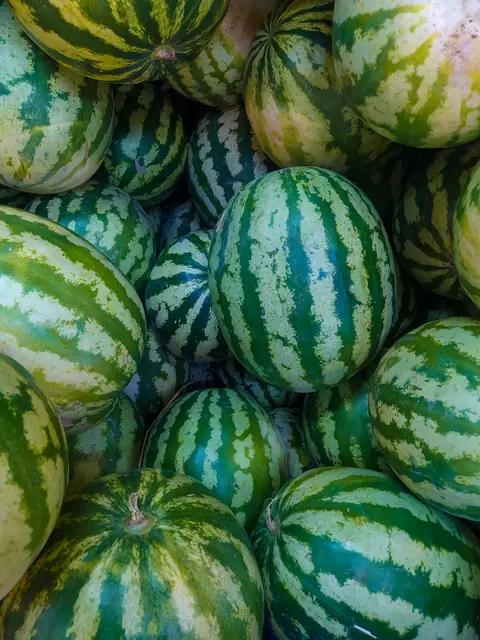
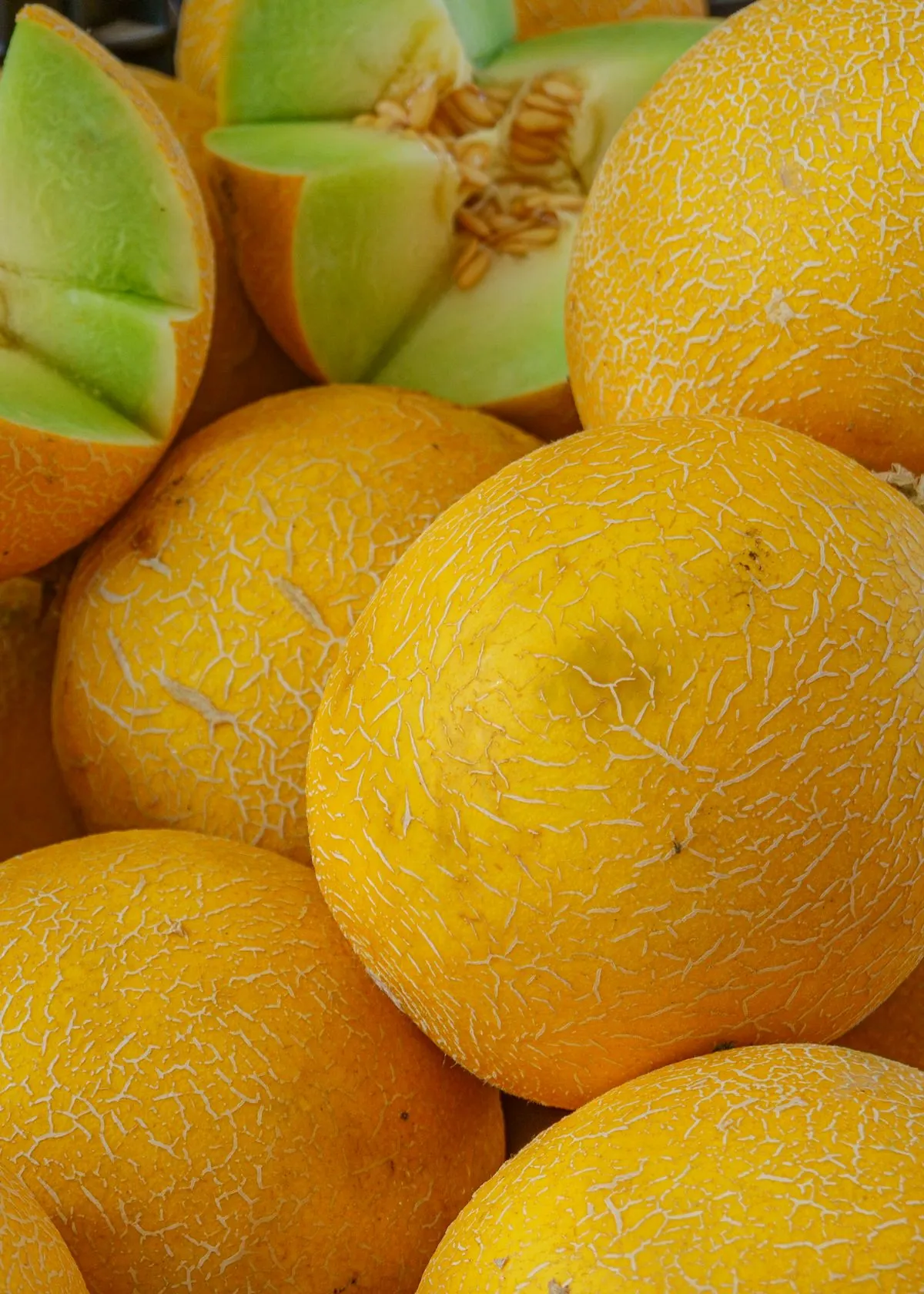
In melon, thick-rinded, late-season types like Kırkağaç and Piel de Sapo store for months after harvest in cool, dry conditions, while thinner-skinned, aromatic varieties like Galia and Ananas are grown for quicker consumption. In watermelon, Crimson Sweet remains the standard variety, alongside Black Pearl and seedless mini types bred for smaller households. Since neither crop continues ripening meaningfully after picking, harvest timing is judged by physical signs rather than the calendar alone: the yellowing of the ground spot where the fruit touches the soil, the drying of the tendril nearest the stem, and — for watermelon specifically — the dull sound the rind makes when tapped. Our guide to choosing a ripe watermelon covers the physical reasons behind each of these signs in detail.
Why seedless watermelon has no seeds, not just fewer
Seedless watermelon is not a variety bred to suppress seed formation — it is the product of a specific cross. Breeders treat a normal (diploid) watermelon plant with a chemical that doubles its chromosome count to create a tetraploid line, then cross that tetraploid as the female parent with ordinary diploid pollen. The resulting seed is triploid, carrying three sets of chromosomes instead of an even two or four, and a triploid plant cannot complete the cell division needed to form mature, hard seeds — which is exactly why the fruit reads as genuinely seedless rather than just few-seeded. The science dates back to Japan in the early 1950s, though it took another five decades before triploid watermelon became a common commercial item rather than a novelty.
You can visit our Melon and Watermelon product pages for full variety, caliber, and packaging detail. Both crops are at peak together in August — see our August harvest guide for how they fit alongside grapes, figs, and the rest of that month's calendar.
Frequently Asked Questions
What are Turkey's main watermelon export markets?
Germany, Russia and Poland together take roughly half of Turkey's watermelon export value (about 52% in IndexBox's 2023 trade data).
Why is seedless watermelon actually seedless rather than just low-seed?
Seedless watermelon comes from a triploid seed with three chromosome sets, produced by crossing a tetraploid line with normal pollen; a triploid plant cannot complete the cell division needed to form mature seeds.