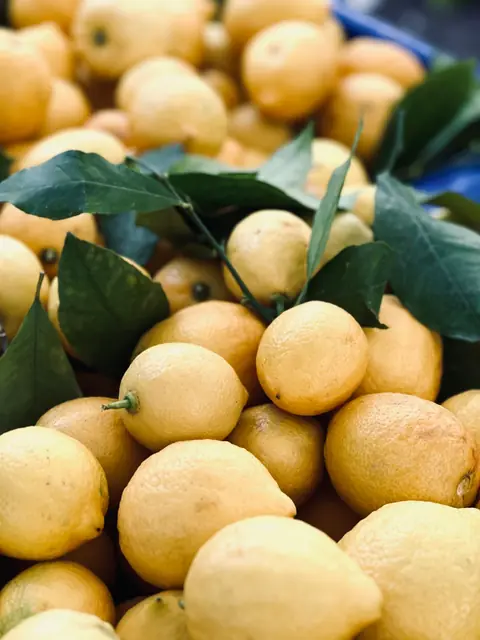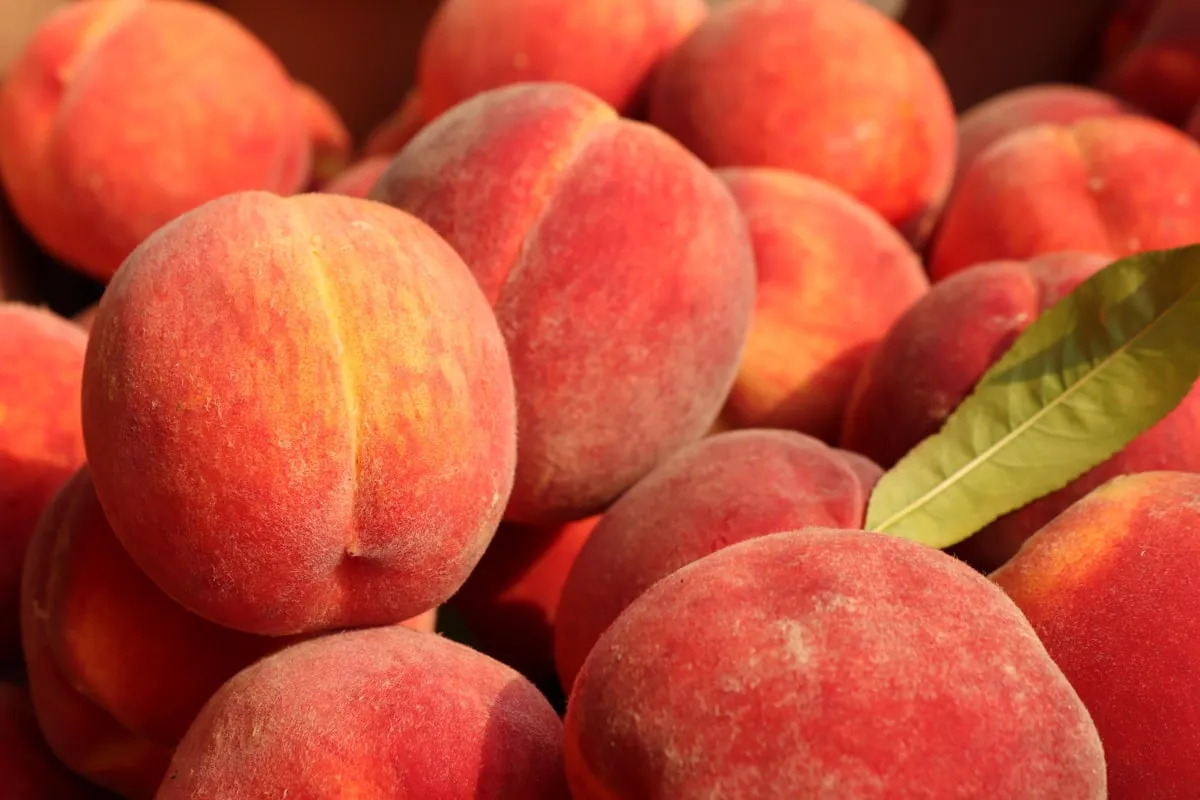
How peach, nectarine, and plum varieties overlap in Turkey's August harvest, and the EU-protected status behind Bursa peach.
Peach, nectarine, and plum share the same growing requirements — a temperate climate with enough winter chilling but shelter from spring frost — which is why Turkey grows all three across the same belt of regions: Bursa, Mersin, Antalya, and Manisa. That shared biology is also why all three hit their combined peak in the same month: August is the single busiest month for peach, nectarine, and plum together, right before the category closes out for the year. Turkey is the world's third-largest producer of peach and nectarine combined, harvesting 1.18 million tonnes in 2024 according to TÜİK data cited by the Aegean Exporters' Association (EİB); the 2025 crop fell to about 642,000 tonnes after spring frost and 2026 is expected to exceed a million tonnes again, and sits among the top five plum producers as well.
Peach: from Silk Road import to EU-protected regional product
The peach reached Anatolia from China via Silk Road trade, and Bursa's climate turned out to suit it so well that in 2024, Bursa Peach received its own EU geographic-indication registration — the same category of protection as Aydın fig and Taşköprü garlic. Flat Peach and Monroe are the two varieties at peak in August: the flat peach's flattened, disc-like shape carries a distinctly sweet, low-acid flavor and firm flesh that withstands transport well, while Monroe is a late-ripening, yellow-fleshed variety with good storage tolerance. Redhaven, one of the main export-grade firm varieties, is still supplying just behind them.
Nectarine: the fuzz-free peach, with its own late-season stars
Nectarine shares peach's growing requirements almost exactly, differing mainly in its smooth, fuzz-free skin — which also means it scuffs and sunburns a little more easily, so handling at harvest matters more. Venus, a late-season freestone variety from the Bursa region, and Gransun, a firm yellow-fleshed export variety, are both at peak in August, with Armking, Big Top, and Orion still in supply alongside them.
Plum: the widest variety spread of the three
Plum's tolerance for a much wider range of climates — from the warm plains of Hatay and Adana to the temperate belt around İzmir and Bursa — gives it the longest harvest season of the three, stretching from spring into autumn. Murdum Plum, known locally as black or red plum for its purple-red tones, and Black Amber, a globally grown export variety with dark purple-black skin, are both at peak in August; Türbe and President varieties continue supplying alongside them into early autumn.
Caliber and packaging: peach and nectarine share a scale, plum does not
Peach and nectarine use the identical letter-and-millimeter caliber scale, from D (51-56 mm, 65-85 g) up through C, B, A, and AA to AAAA (90 mm and up, 300 g and up) — a reflection of just how closely the two fruits track each other agronomically. Plum is sized by diameter in contiguous 5 mm bands from 35-40 mm up to 60 mm and above; 35 mm is the minimum for Extra and Class I in large-fruited varieties, and Class I tolerates at most 2% split or worm-eaten fruit. All three typically ship in a 30×50×10 cm single-layer carton at 2-3 kg net (144 boxes per pallet) or a smaller 17×26×10 cm carton at 1-2 kg net (378 boxes per pallet); plum alone also offers a 2.5 kg perforated small-pack option and a 5 kg wholesale carton.
Because all three fruits are soft and delicate, cold-chain handling right after picking matters more for this category than for almost any other — see our cold chain guide for how we manage that, and our August harvest guide for how these three fit into that month's full calendar. You can visit our Peach, Nectarine, and Plum product pages for full variety, caliber, and packaging detail.
Frequently Asked Questions
Why do peach, nectarine, and plum all peak in Turkey at the same time?
They share the same growing requirements — a temperate climate with adequate winter chilling and shelter from spring frost — and are grown across the same regions (Bursa, Mersin, Antalya, Manisa), so their harvest windows naturally overlap, with August as their shared peak.
What is Bursa Peach's EU geographical indication status?
Bursa Peach received EU geographic-indication registration in 2024, the same category of protection held by Aydın fig and Taşköprü garlic.
Do peach, nectarine, and plum use the same caliber system?
Peach and nectarine share an identical letter-and-millimeter scale from D (51-56 mm) to AAAA (90 mm and up); plum is sized separately by diameter, in 5 mm bands from 35-40 mm up to 60 mm and above.