How Taşköprü garlic from Kastamonu earned EU Protected Designation of Origin status, and what that means for buyers.
Most garlic sold internationally is a commodity distinguished mainly by size and color. Taşköprü garlic is not: on April 16, 2021, the European Union granted it Protected Designation of Origin (PDO) status, the same category of legal protection that covers products like Parmigiano Reggiano or Champagne — a formal recognition that this garlic's character comes specifically from where and how it is grown, not just from the crop itself.
A district, not just a variety
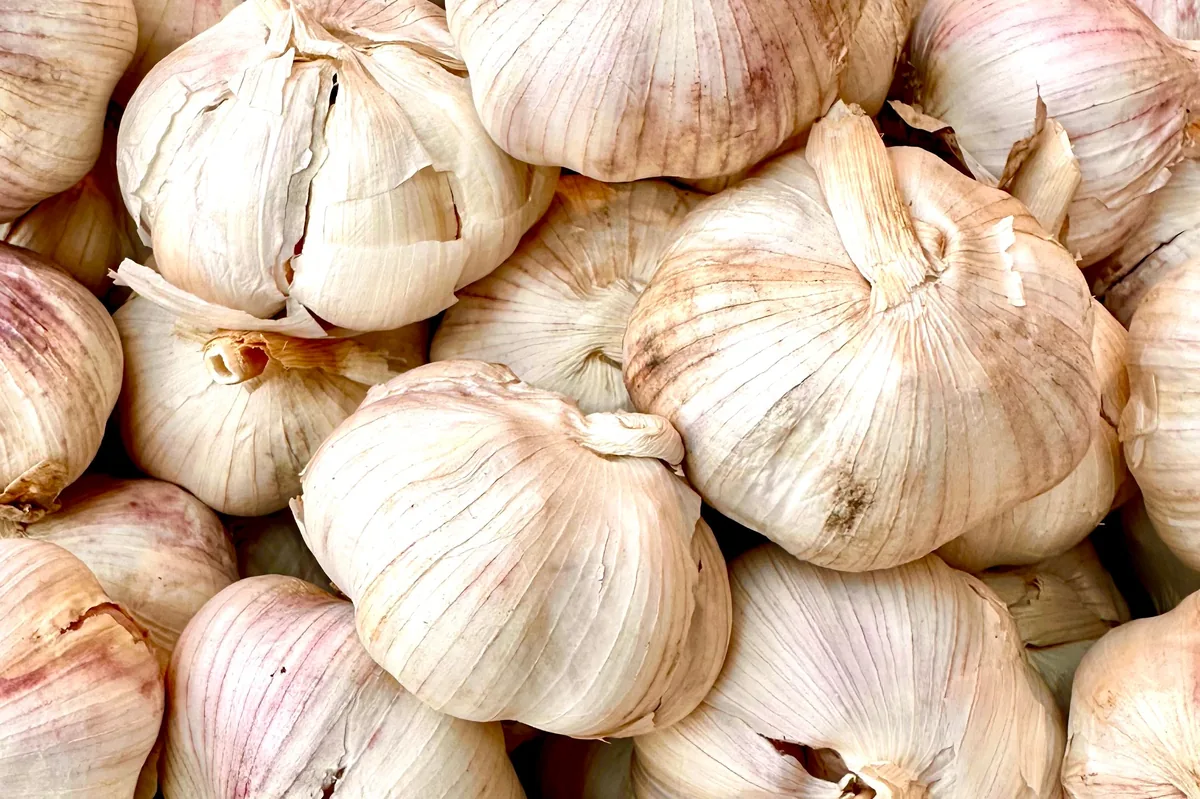
The garlic takes its name from Taşköprü, a district of Kastamonu province on Turkey's Black Sea coast, where local growers have long called it the region's "white gold." Around 4,000 farming families in the district make a living from it, together producing an average of roughly 20,000 tons a year. The bulbs are visually distinctive — white heads, creamy yellow cloves under a faint pinkish shell — and are known for a pungency and dry-matter content well above ordinary garlic, the product of Taşköprü's particular soil and microclimate rather than any single cultivation technique that could simply be copied elsewhere.
What the growing calendar looks like
Around Taşköprü, garlic is planted in autumn (October-November) and harvested the following June-July. After harvest, bulbs are cured by drying in sun or shade with their stems left attached, hardening the outer skin enough to allow long-term storage and a genuinely year-round supply — unusual for a crop harvested in only a two-month window. Alongside Taşköprü garlic, Turkey also grows larger-bulbed common garlic on the Konya plain for commercial volume, giving exporters a boutique, geographically-protected option and a bulk-volume option side by side.
Why the GI status matters commercially
A protected geographical indication is a legal claim, not a marketing phrase — it tells an importer that garlic sold under the Taşköprü name has been verified as genuinely coming from that district, the same assurance PDO status gives buyers of other regionally-protected foods. For gourmet and boutique retail channels in particular, that traceable origin is itself part of what the product is selling, distinct from garlic priced purely on bulb size.
You can visit our Garlic product page for variety, caliber, and packaging detail, including our hand-braided Taşköprü-style presentation option.
Frequently Asked Questions
When did Taşköprü garlic receive EU Geographical Indication status?
On April 16, 2021, the European Union granted Taşköprü garlic Protected Designation of Origin (PDO) status.
How much Taşköprü garlic is produced annually?
Around 4,000 farming families in the Taşköprü district produce an average of roughly 20,000 tons a year.