The difference between our two fresh fig varieties — Bursa Black and Bardacık — their harvest calendars, and how fresh fig is actually sized and packed.
The fig has grown in the fertile soils of Turkey's Aegean region for thousands of years; Turkey is the world's largest fig producer, harvesting roughly 375,000 tonnes in 2024 (about 28% of world output, according to TÜİK data cited by the Ministry of Agriculture and Forestry). Within that broad production base, the varieties grown for the fresh market differ from region to region and, to some extent, in calendar: the two fresh varieties on our Fig product page reach the market from different regions and on partly overlapping windows — Bursa's dark-skinned Bursa Black and İzmir's pear-shaped Bardacık.
Bursa Black: Bursa's fresh-market variety
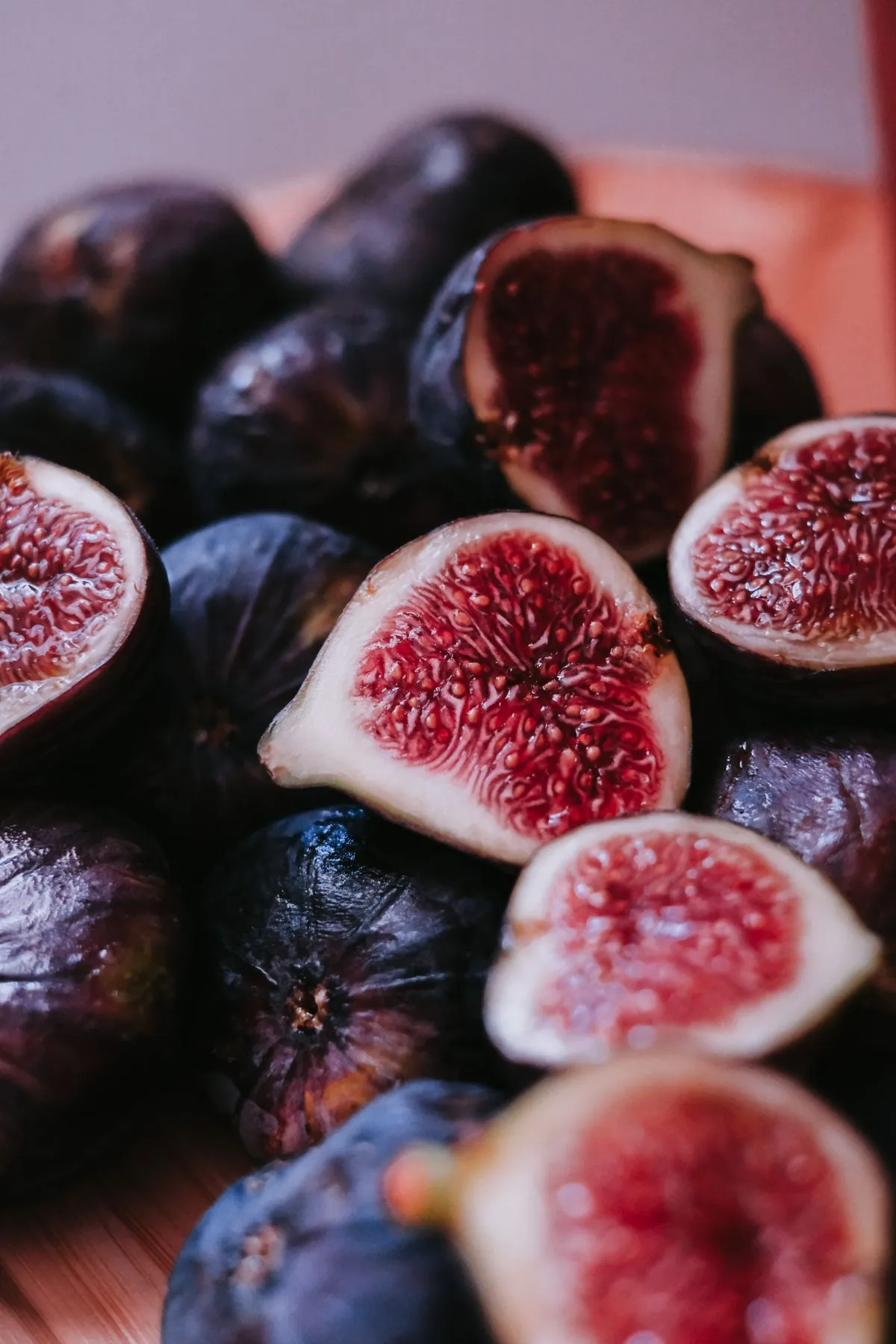
Bursa Black has dark purple-black skin and juicy, soft flesh. Its short shelf life after harvest means it is suited to quick consumption or short-distance shipping; it peaks in August and is gone from the fresh calendar by October.
Bardacık: İzmir's thin-skinned variety, grown strictly for freshness
Bardacık is a local İzmir variety with a pear-shaped form and thin skin. While many Aegean figs are also suited to drying, Bardacık's comparatively lower sugar content makes it unsuited to that use — so it is grown strictly for fresh consumption. It is harvested in July-August, a window that partly overlaps with Bursa Black's but starts a little earlier.
Why careful handling matters for both
Fresh figs like Bursa Black and Bardacık are hand-picked once fully ripe on the tree, generally every few days through the season, and handled carefully given how delicate ripe fresh fruit is, then cooled quickly ahead of shipment.
How fig is actually sized: uniformity rather than a fixed scale
Fresh figs are graded into Extra, Class I, and Class II quality tiers and must meet a minimum diameter of 40 mm to be sold as fresh fruit. Unlike apples or citrus, fig has no fixed caliber-band table; instead the standard requires size uniformity within each package — a diameter spread of no more than 5 mm for layer-packed fruit, or 10 mm for bulk-packed fruit. Typical fresh packaging is a 20×30 cm single-layer tray (750 g net, 8-16 pieces) or a 200 g-1 kg retail punnet.
You can visit our Fig product page for full variety, caliber, and packaging detail, and see our August harvest guide for how fig fits alongside grape and melon in that month's calendar.
Frequently Asked Questions
What is the difference between Bursa Black and Bardacık fig?
Bursa Black has dark purple-black skin and comes from the Bursa region; Bardacık is a pear-shaped, thin-skinned variety local to İzmir. Both are grown strictly for fresh consumption and their harvest windows partly overlap.
How is fresh fig sized?
Fresh fig has a minimum diameter of 40 mm. Rather than a fixed caliber-band table, the standard requires size uniformity within each package — up to 5 mm diameter spread for layer-packed fruit, or 10 mm for bulk-packed fruit.
How large a share of world fig production does Turkey supply?
Turkey is the world's largest fig producer, harvesting roughly 375,000 tonnes a year — about 27.8% of total world production.