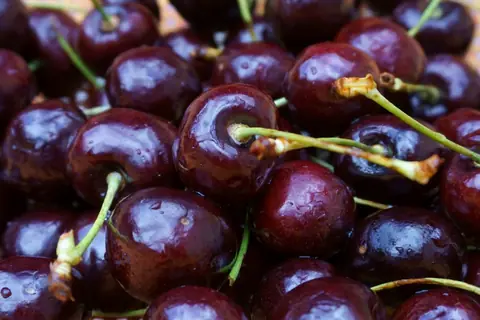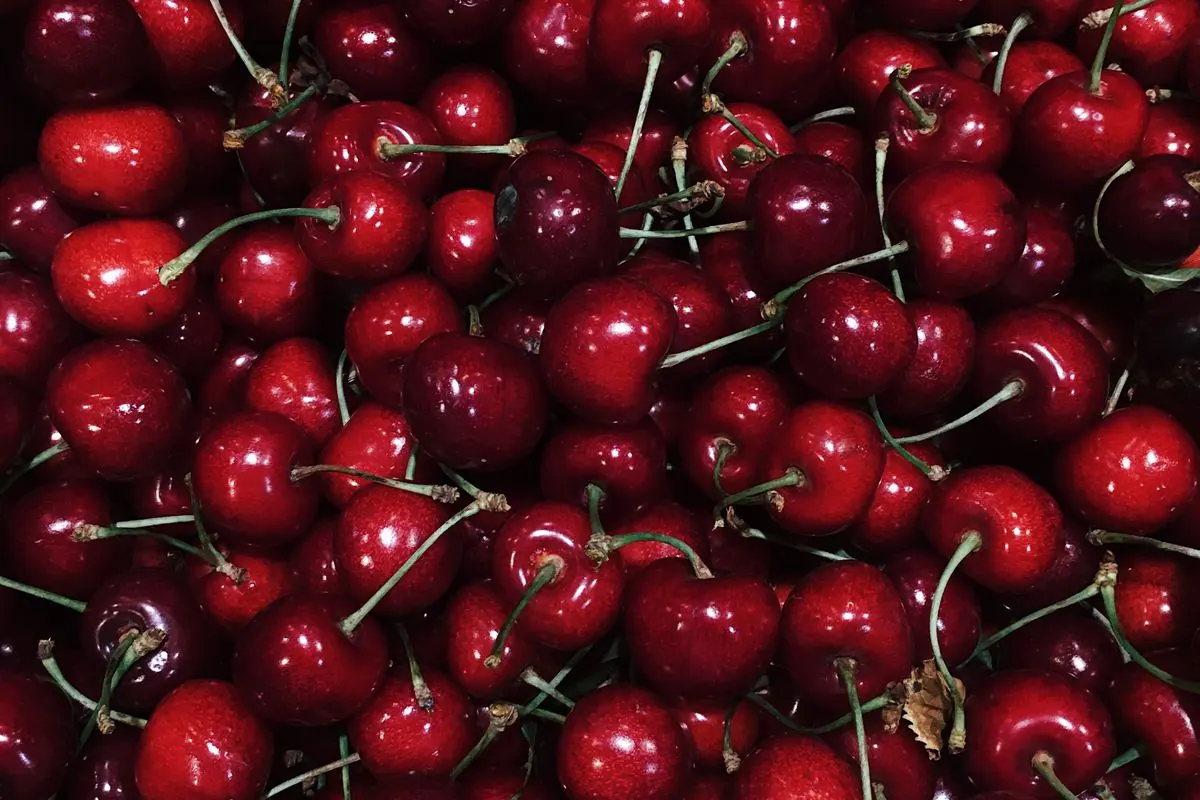
Following 2025's frost-driven production losses, cherry and sour cherry exports reached $101.72 million in the first half of 2026, up 333% year-on-year.
Behind Turkey's global leadership in cherry is a striking export figure from the first half of 2026: cherry and sour cherry exports reached $101.72 million in the January-June 2026 period, up 333% over the same period the previous year.
The story behind a 333% jump
Much of that dramatic percentage comes from an unusually low comparison base: the previous year, 2025, saw frost-driven production losses that depressed exports well below normal. So the figure reflects not only a strong 2026 season, but also a weak 2025 one.
Even so, it is concrete evidence of how quickly the sector can recover after a frost year. For a crop like cherry, which is vulnerable to short cold snaps during flowering, a lost season and a full-capacity return the following year generally are not far apart, as long as the orchard infrastructure itself comes through undamaged.
The backbone of exports: the Western Mediterranean
Roughly 40% of cherry and sour cherry exports move through the Western Mediterranean Exporters' Association (BAİB), covering Antalya, Isparta, and Burdur. That region's weight is not a coincidence: as we cover in our supply regions article, orchards on the Taurus highlands at 1,500-2,000 meters elevation give growers weeks of extra harvest window compared with lowland orchards.
That altitude difference lets even a single variety, 0900 Ziraat, spread its harvest calendar from mid-June to early August depending on elevation. For exporters, that turns a season that would otherwise be squeezed into one narrow window into a supply flow stretched across several weeks.
International markets
Turkish cherry and sour cherry ship mainly to European markets, led by Germany and Russia, while Far East and Middle East markets are reached largely by air freight.
That choice of transport mode is not incidental: cherry's short shelf life demands a much faster, if costlier, mode of transport than sea freight — for distant markets in particular, it is the only reliable way to keep the fruit fresh on arrival.
A regional cross-check: the Aegean's share
According to Aegean Exporters' Association (EİB) data, the Aegean region's own cherry exports reached $49 million in the first half of 2026 (EİB data), within the region's $572 million fresh produce total. The Aegean region also ranked cherry as its own second most valuable fresh export in the first half, while the region's total fresh fruit and vegetable exports grew 2% to reach $572 million.
Part of a broader production leadership picture
According to Turkey's Ministry of Agriculture and Forestry, Turkey ranks among the world's top three producers in a long list of crops. This export surge in cherry and sour cherry is just the latest data point in that much broader production leadership picture.
| Ranking | Products |
|---|---|
| World #1 | Cherry, fig, apricot, quince, carob |
| World #2 | Sour cherry |
| World #3 | Pistachio, olive, apple, peach, tomato |
| World #4 | Pear |
Frequently Asked Questions
How much did cherry and sour cherry exports grow in the first half of 2026?
Cherry and sour cherry exports reached $101.72 million in the January-June 2026 period, up 333% over the same period the previous year — a jump largely driven by 2025's unusually low, frost-affected production base.
How much of cherry and sour cherry exports move through the Western Mediterranean?
Roughly 40% of cherry and sour cherry exports move through the Western Mediterranean Exporters' Association (BAİB), covering Antalya, Isparta, and Burdur.
Which markets does Turkish cherry and sour cherry ship to?
They ship mainly to European markets, led by Germany and Russia, while Far East and Middle East markets are reached largely by air freight because of cherry's short shelf life.
How much does the Aegean region contribute to cherry exports?
According to Aegean Exporters' Association (EİB) data, cherry exports from the Aegean region alone reached $49 million in the first half of 2026 (EİB data), second among the region's fresh exports after tomato.